Sensory Differences and Autism: A Parent’s Guide

Many children diagnosed with autism spectrum disorder (ASD) experience the world differently through their senses. Sounds, textures, lights, movement, and touch can feel more intense, less noticeable, or simply different from their peers. These differences are known as sensory sensitivities, and understanding them can help parents and caregivers support their child best.
For some autistic children, everyday environments can feel overwhelming and cause sensory overload. A grocery store might not just be “a little loud,” it might feel like every sound is turned all the way up. Fluorescent lights might flicker in a way that’s distracting and uncomfortable, and clothing tags can feel impossible to ignore.
For other children, sensory input may not feel strong enough. They may seek out more movement, more pressure, or more stimulation to feel regulated and engaged with the world around them.
Many parents wonder, are sensory issues a sign of autism? Sensory differences are very common in children diagnosed with ASD, though they can also occur in other situations. Understanding what sensory needs in autism are can help families better support their child. Let’s look at what these sensory differences may look like in everyday life.
Examples of sensory sensitivities in autism: what parents may notice
Sensory differences can show up in many ways, and they often look different from one child to another. Some children may be more sensitive to sensory input, where everything feels more intense. For example, they might:
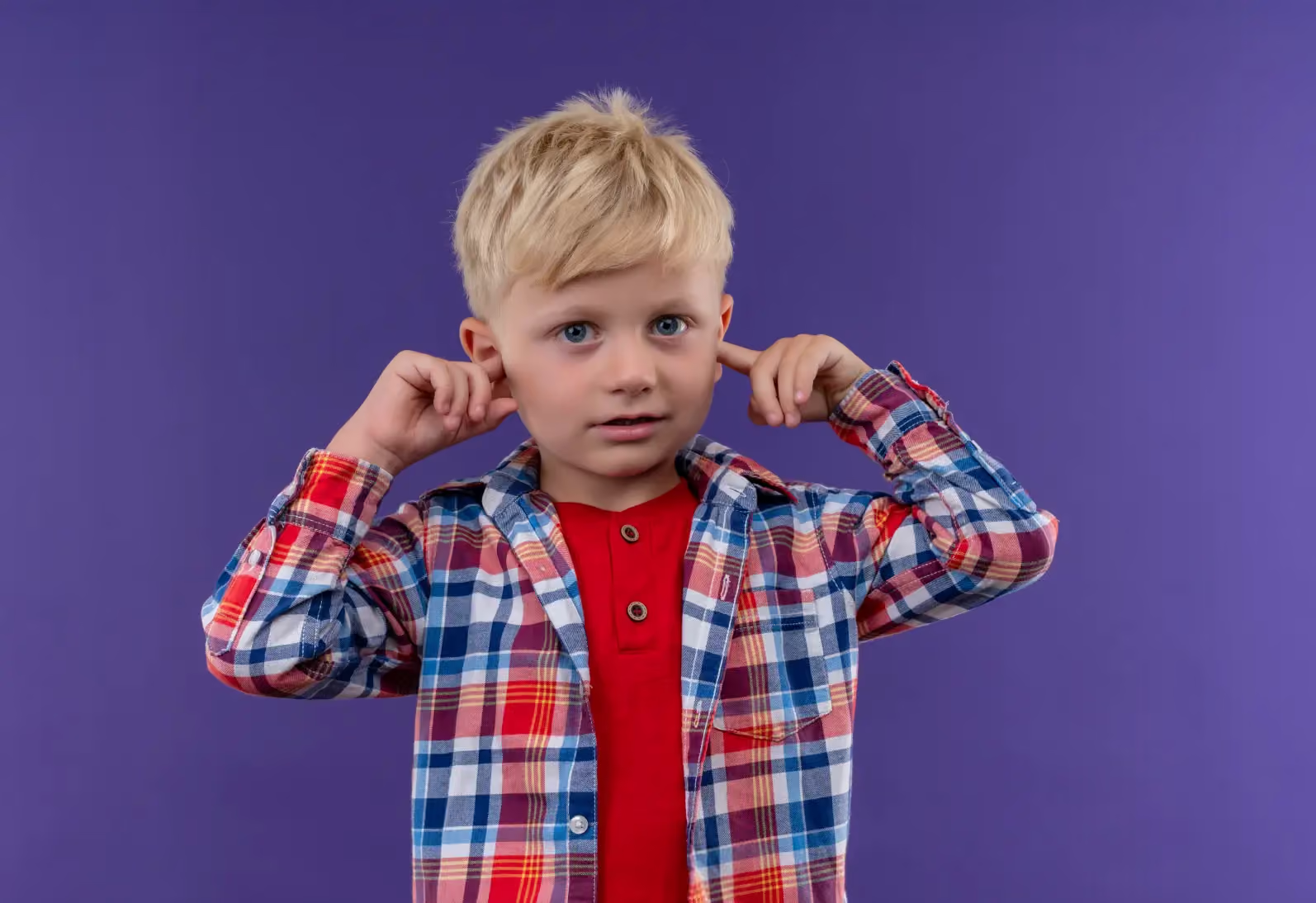
- Cover their ears when a vacuum turns on, a toilet flushes, or a fire alarm sounds
- Refuse to wear certain clothing because of tags, seams, or fabric textures
- Feel overwhelmed in busy spaces like birthday parties or grocery stores
- Struggle with grooming routines like hair brushing or nail trimming
- Avoid messy play, like finger paint, sand, or certain foods
On the other hand, some children may seek out more sensory input instead:
- Crave movement like jumping, spinning, or running
- Seek out tight squeezes or hugs
- Enjoy certain textures like soft fabrics or putty
- Prefer strong flavors or chew on objects like shirt sleeves
- Watch spinning objects or move in repetitive ways
The impact of sensory differences in autism on daily life
Sensory differences don’t just show up in isolated moments at home; they can affect many parts of a child’s daily life, from school to daily routines.
Sensory overload in the classroom
In school settings, sensory input can make it harder for a child to focus, learn, and participate. What may look like inattention or lack of participation may actually be sensory overload.
- A child may struggle to pay attention because the hum of fluorescent lights or chatter in the classroom feels overwhelming
- Sitting still in a chair may feel uncomfortable if a child is seeking movement
- Group activities may feel stressful if there’s too much noise or unpredictability
Behavior and emotional responses
When sensory input is too much or not enough, children may respond with behaviors that communicate discomfort or unmet needs.
- An autistic child might have a meltdown in a crowded store
- Repetitive behaviors, like rocking or hand flapping, may help with regulation
- A child may try to run out of a room to escape a loud noise
Daily routines and physical functioning
Sensory differences can also affect everyday activities like eating, sleeping, and self-care. These challenges can impact not only the child but also the entire family’s daily routines.
- A child may have a limited diet because they don’t like or prefer certain food textures
- Bedtime may be challenging due to sounds, light, or the feeling of pajamas or blankets
- Tasks like brushing teeth, getting dressed, or taking a bath may feel difficult
- Some children may have coordination challenges
Behavior is communication. What is sensory overload saying?
When something feels too loud or overwhelming, a child with strong communication skills might say, “It’s too loud,” or “I need a break.” But many autistic children are still learning how to communicate those needs clearly. A child who has not yet built those communication skills may express discomfort through behavior instead.
- A child might drop to the floor instead of saying, “This is too much.”
- A child may push a food away instead of saying, “I don’t like that texture.”
- A child might cry, cover their ears, or try to leave a room instead of saying, “I need a break.”
When we look at behavior through this lens, it helps us respond with understanding instead of frustration. Through individualized applied behavior analysis (ABA) therapy, Board Certified Behavior Analysts® (BCBAs®) help children learn functional communication skills so that they can express what they need.
When children can advocate for themselves, frustration often decreases, and independence increases. Families also begin to see more predictable, manageable routines at home.
How parents can support their autistic child’s sensory needs at home
There are many simple, practical ways parents can support their autistic child with sensory sensitivities at home, in school, and in the community. Small changes to the environment can make a huge difference in how comfortable and focused they feel.
Some helpful supports to help reduce sensory difficulties and autism-related sensory overwhelm include:
- Dimming lights to reduce overstimulation
- Creating a quiet sensory break area
- Reducing visual clutter, like bright colors or too many toys at once
- Using noise-reducing headphones, fidget items, or sunglasses
- Placing your child away from loud areas or near a trusted adult
- Practicing tolerance for different environments in a gradual way
Building independence through ABA for sensory needs
Applied behavior analysis is an evidence-based therapy that uses positive reinforcement to help autistic children learn new skills and reduce behaviors that may make learning harder. Compassionate clinicians, including BCBAs and Registered Behavior Technicians® (RBTs®), help children build meaningful skills for everyday life.
Instead of discouraging a child’s sensory preferences, BCBAs at ABC ask, “How can we use this sensory need to support learning?” These insights are then built into a child’s individualized goals in partnership with families. This approach helps children feel understood and supported, rather than corrected or restricted.
For example, if a child loves movement, we may incorporate jumping, swinging, or short movement breaks into teaching sessions. Or if they enjoy a specific texture like slime, that material can be used during learning activities. This approach supports children as they learn new skills while honoring the way they experience the world.
How BCBAs partner with families to support autism sensory differences at home
Parents and caregivers are essential members of the ABA treatment team. You know your child best, their preferences, their routines, what helps, and what doesn’t. That insight is a critical part of building effective goals that support your child’s daily life.
If your family regularly attends church, sporting events, or large gatherings, we can work to help your child feel more comfortable in those spaces. If mealtimes are challenging due to food textures or routines, we can support skill-building around eating and participation in family time around the table. If mornings feel overwhelming, we can focus on building predictable routines for getting dressed, brushing teeth, and leaving the house.
Sometimes, families have goals involving environments with strong sensory input, which can be addressed through thoughtful, individualized support. A parent may want their child to be able to:
- Attend a concert
- Go to a loud restaurant
- Participate in school assemblies
- Use public restrooms independently
For many children, this can feel like a lot at first, but it’s where ABA strategies come into play. Instead of expecting a child to tolerate everything at once, we break experiences into small, manageable steps so that they can build confidence over time.
For example, if a child is afraid of the loud hand dryer in a public restroom, we might:
- Recorded the sound of the dryer
- Let the child control when it plays
- Practiced being in a restroom without the dryer on
- Gradually introduced the sound in the actual environment
- Allowed the child to be the one who activated the dryer
- Reinforce each step with plenty of encouragement
This gradual approach helps reduce overwhelm and builds tolerance in a way that feels safe and achievable. Over time, children can participate more comfortably in the environments that once felt too intense.
Get support for ASD and sensory sensitivities
Sensory differences are a common symptom of autism, and every child experiences them in their own way. Many parents begin exploring this topic when they notice examples of sensory sensitivities, such as strong reactions to sound, textures, or busy environments. With the right individualized support, children diagnosed with autism can reach meaningful outcomes and learn to:
- Communicate their needs more clearly
- Advocate for themselves in different situations
- Participate more fully in daily routines and activities
- Build independence at their own pace
If you’re exploring next steps for your child, you don’t have to figure it out alone. Reach out to an Action Behavior Centers ABA center near you to learn about diagnostic support, schedule a tour, or talk through your insurance options. We don’t have waitlists, to ensure you can get started right away.
At Action Behavior Centers (ABC), we help children diagnosed with autism spectrum disorder (ASD) reach milestone moments. Compassionate care is at the heart of everything we do, and our highly trained clinicians deliver evidence-based applied behavior analysis (ABA) therapy tailored to each child’s unique needs.
Our autism services include diagnostic support, 1:1 individualized care, parent training, school readiness programs, and Early Intensive Behavioral Intervention (EIBI) across hundreds of centers in Arizona, Colorado, Illinois, Minnesota, North Carolina, and Texas. Because no family should have to wait for help, ABC offers immediate access to care. Contact us today to get started.