9 Tips for Communicating with Children Diagnosed with Autism

Communication is one of the most important skills a child can learn. It helps them build relationships, express their needs, and connect with the world around them. For children diagnosed with autism spectrum disorder (ASD), communication may look different. Before exploring practical strategies, it helps to understand how autism can shape the way a child communicates.
Understanding autism and speech challenges
Autism spectrum disorder affects each child differently. Some children may have a strong vocabulary but find it hard to hold a conversation. Others may use very few or no spoken words, which is sometimes described as nonverbal autism. Understanding your child’s strengths and communication style can help you support them in ways that feel natural.
Common communication differences in autistic children may include:
- Delayed speech or language development
- Difficulty understanding tone, humor, or idioms
- Limited eye contact during conversations
- Repetitive or scripted speech (echolalia)
- Challenges with turn-taking or back-and-forth conversation
- A preference for visual or nonverbal communication
These differences don’t mean a child can’t communicate. They simply mean communication may show up in unique ways. The tips below offer practical ways to support speech and communication at home, along with information about nonverbal communication and how applied behavior analysis (ABA) therapy supports growth and learning.
9 tips for communicating with children diagnosed with autism
1. Start with connection, not correction
Begin by focusing on your child’s interests. Instead of pushing for words right away, join in their play, mirror their actions, or comment on what they’re doing. This builds trust and creates a shared experience.
Example: If your child is lining up toy cars, say, “You lined up the red car and the blue car,” instead of asking, “What color is that?”
Why it works: Research shows that children learn language best during moments of shared attention, especially when caregivers follow the child’s interests. These moments create a natural space for children to notice words, connect them to actions, and build early vocabulary.1
2. Use clear, simple language
Children diagnosed with autism may process language differently. Long or abstract sentences can make it harder for them to understand what you mean. Short, concrete language helps them focus on the key message.
Example: Instead of “We’re going to have lunch soon, so please clean up your toys before we sit down,” try: “Time to clean up. Then lunch.”
Why it works: Studies show mixed findings about vocabulary size in autistic children, which suggests that spoken words alone don’t always reflect how a child processes language in real time. Using simple, direct language removes extra demands and helps the child tune into what matters most.2
3. Pair words with visuals and gestures
Visual communication is a very effective tool, and autistic children are no different. Combining spoken words with pictures, gestures, or signs can make language easier to understand and communication more meaningful.
Try:
- Picture cards for common activities like “eat,” “bath,” or “play”
- A visual schedule with photos or drawings
- Simple gestures like pointing, waving, or thumbs up
Why it works: Research shows that visual supports can reduce anxiety, increase understanding, and strengthen communication for children diagnosed with autism. Many autism clinical guidelines now recommend visual supports because they help bridge the gap between spoken language and real-world actions.3
4. Encourage turn-taking and back-and-forth communication
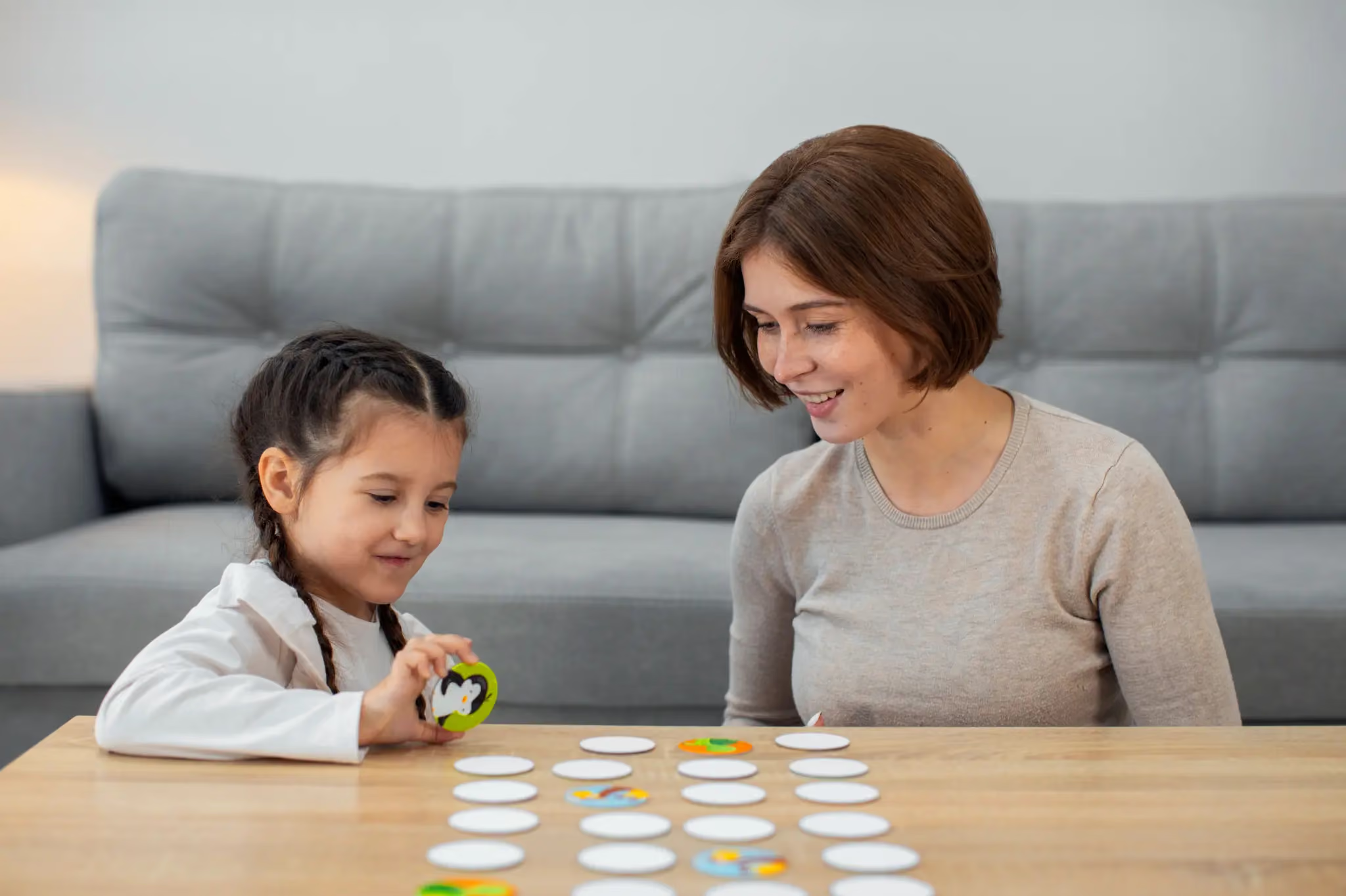
Conversations can grow from a simple skill: taking turns. Even if a child doesn’t use words yet, they can learn turn-taking through play and shared activities with you, siblings, or peers.
Try:
- Rolling a ball back and forth
- Using playful pause games like “Ready, set…go!”
- Waiting several seconds after asking a question to give them time to respond
Why it works: Turn-taking gives children a simple, low-pressure way to practice the back-and-forth flow of communication. Guided play research shows that when adults join in play and provide gentle support, children learn new skills more easily. This combination of fun and structure helps them stay engaged while building early communication habits.4
5. Follow their lead and expand language naturally
When your child communicates—through words, gestures, sounds, or pointing—respond by acknowledging them and adding a little more language. This meets them where they are and gently models the next step.
Example: If your child points to a cookie, you might say, “Cookie! You want the chocolate cookie.” If they say “ball,” you might add: “Yes, the big red ball! Let’s throw it.”
Why it works: This strategy, called language expansion, builds on what your child is already communicating and models the next step in a way that feels natural. Many children diagnosed with autism understand more than they can easily express, especially if motor-planning challenges like dyspraxia are present. By adding just a few words to what your child says or shows, you give them a clear, manageable example they can imitate when they’re ready.5
6. Use positive reinforcement
Celebrate every communication attempt, whether it’s a word, sound, gesture, point, or facial expression. Every small step deserves encouragement!
Examples of reinforcement:
- Verbal praise, like “You told me what you wanted. Great job!”
- Access to a favorite toy or activity
- High-fives, hugs, or enthusiastic reactions
Why it works: Positive reinforcement helps children understand that their communication has an impact. Research shows that when a child’s attempts—words, gestures, or sounds—are followed by something meaningful, they are more likely to try again. Celebrating these moments builds confidence, increases motivation, and encourages more communication over time.6
7. Incorporate play into communication practice
Play is one of the most effective ways to teach language, social skills, and early communication. Choose activities that naturally encourage imitation, turn-taking, and shared attention.
Try:
- Peek-a-boo or hide-and-seek
- Pretend play with dolls or toy animals
- Songs with actions like “Head, Shoulders, Knees, and Toes”
Why it works: Play creates a fun, low-pressure environment where children can practice communication through exploration. A systematic review of play-based interventions for children diagnosed with autism found improvements in social interaction, communication, daily living skills, and parent–child bonding. When learning feels joyful and interactive, children stay engaged and are more likely to use new communication skills.7
8. Be patient and model communication often
Children diagnosed with autism may need extra time to process language. Give them a few seconds before repeating a question, and continue modeling language throughout the day. Narration—talking out loud about what you’re doing and what your child is experiencing—is especially helpful.
Ideas include:
- Narrating daily activities: “I’m washing dishes,” “Let’s open the door.”
- Using consistent phrases during routines: “Time for shoes,” “Let’s go outside.”
- Repeating new words in natural conversation
Why it works: When you narrate what you’re doing and slow down your communication, you give your child more time and more language to learn from. Research on narrative-based interventions shows that storytelling and narration support a wide range of language skills, including vocabulary, grammar, inferencing, and social communication. Because narration fits easily into daily routines, it’s an efficient strategy that caregivers can use throughout the day.8
9. Partner with ABA therapists and reinforce skills at home
Board Certified Behavior Analysts® (BCBAs®) and Registered Behavior Technicians® (RBTs®) help children build communication, social, and learning skills through individualized teaching during ABA therapy sessions. At home, you can strengthen this progress by practicing the same skills in familiar routines.
Try:
- Practicing communication during meals or play
- Using a visual schedule for routines
- Reading social stories together
Why it works: Children learn best when skills are practiced in different places and with other people. Research shows that many children diagnosed with autism are able to generalize communication skills after early intervention when they have consistent support across settings, like during meals, play, and errands.9
How ABA therapy can help improve communication skills
Applied behavior analysis is a research-driven behavioral therapy that helps autistic children build meaningful and functional skills like communication. Through personalized and consistent support, BCBAs and RBTs can help children build communication skills in ways that match their strengths and needs.
ABA therapy can help children build:
- Expressive and receptive language
- Nonverbal communication skills, including understanding social cues
- Functional communication, such as requesting, labeling, or responding
- Turn-taking and early conversation skills
Signs your child may have autism
You may notice:
- Limited use of gestures or sounds by 18 months
- No spoken words or two-word phrases by age 2
- Frequent frustration or tantrums during communication attempts
- Loss of previously used words or social skills (this is called regression)
If you’re seeing these signs, complete a quick online autism screener.
Get started with ABA therapy for autism and speech delays
At Action Behavior Centers, we offer personalized ABA therapy treatment that helps children strengthen communication, social, and independence skills. Families can benefit from:
- Autism assessments, including the ADOS-2
- Immediate access to care
- Help navigating insurance benefits
- Individualized goals designed around each child’s unique needs
- Regular Family Guidance sessions
Whether your child is just beginning to communicate or working on more advanced skills, ABC is here to support their growth. With ABA therapy centers located across the country, including in cities like Phoenix, Chicago, and Colorado Springs, families can access personalized support for communication and skill development.
Schedule an autism evaluation or contact a nearby Action Behavior Centers location to get started today.
At Action Behavior Centers (ABC), we help children diagnosed with autism spectrum disorder (ASD) reach milestone moments. Compassionate care is at the heart of everything we do, and our highly trained clinicians deliver evidence-based applied behavior analysis (ABA) therapy tailored to each child’s unique needs.
Our autism services include diagnostic support, 1:1 individualized care, parent training, school readiness programs, and Early Intensive Behavioral Intervention (EIBI) across hundreds of centers in Arizona, Colorado, Illinois, Minnesota, North Carolina, and Texas. Because no family should have to wait for help, ABC offers immediate access to care. Contact us today to get started.