Evidence-Based ABA Therapy Center Design: Take A Look Inside

.avif)
"I recently toured a family who had visited several ABA centers that felt more like medical offices than places for children. By the end of the tour, the parent teared up and said Parker finally felt warm, inviting, and safe. She said it was the first time she felt confident her child would be cared for the way she cares for them."
- Operations Manager, Parker, CO
How our ABA therapy centers are designed with autistic children in mind
The way an applied behavior analysis (ABA) therapy center looks, feels, and sounds can influence how children diagnosed with autism spectrum disorder (ASD) learn and engage. When our center design team imagined our autism therapy environments, they focused on four key ideas:
Comforting. Playful. Tranquil. Safe.
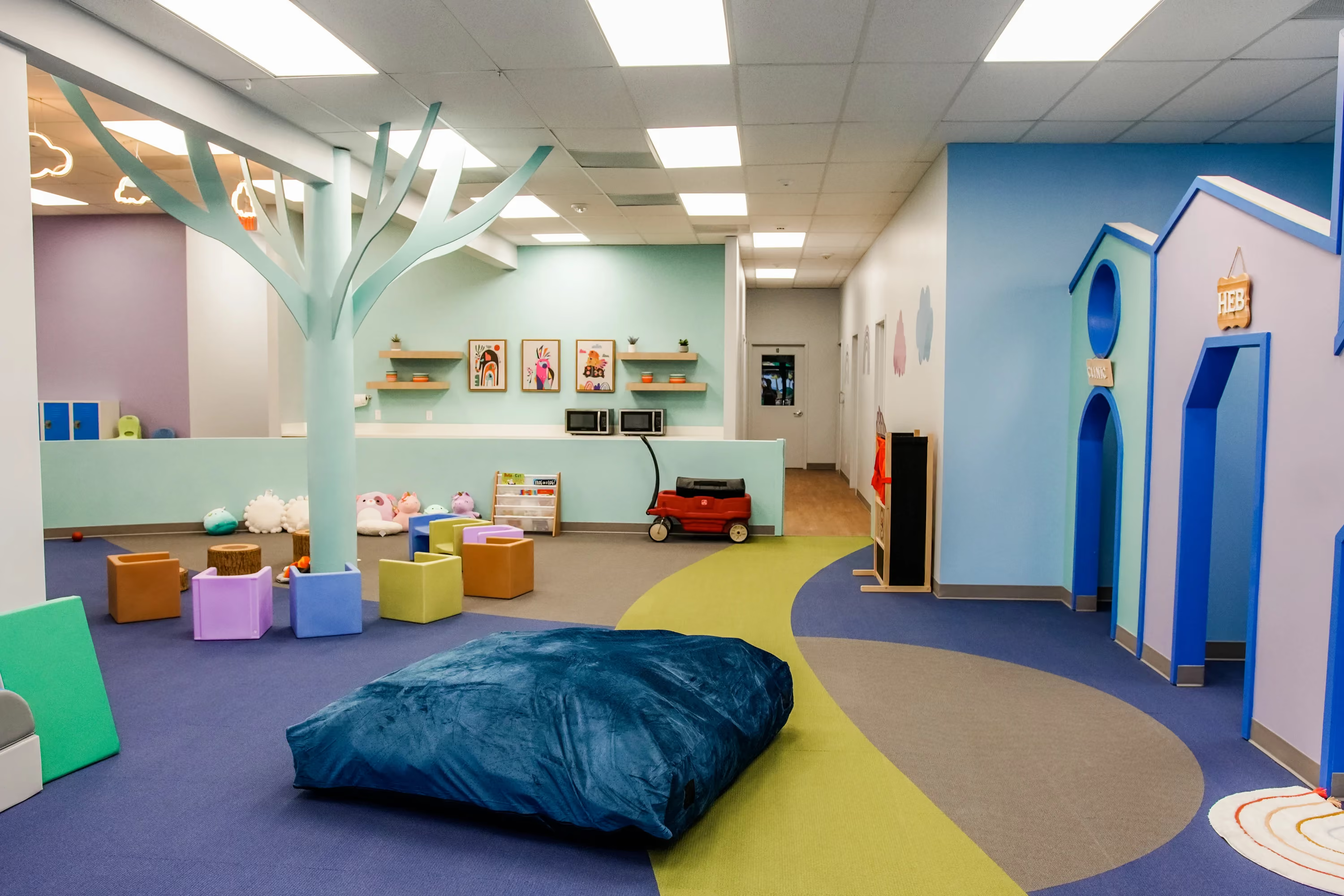
These words guided every design decision, from ceiling shapes to flooring patterns to corridor layout. Some features you may notice in our autism-friendly ABA therapy spaces include:
- Open floor plans with clear lines of sight
- High ceilings in shared spaces
- Fewer hallways to improve flow and reduce crowding
- Soft, safe materials
- Calm, lower-contrast color palettes
Each element is chosen intentionally to help the children we serve to feel safe, supported, and ready to build new skills. But thoughtful design goes deeper than layout alone. We also looked closely at research about how visual elements like shapes and patterns can influence how autistic children experience a space.
How shapes and visual design can affect autistic children
When designing our centers, our clinical leaders reviewed research in environmental design, psychology, and child development. One important area we explored was how shapes can influence emotional responses.
Some studies suggest children diagnosed with autism may respond differently to certain visual patterns than neurotypical children. For example, one study found that autistic children showed more positive responses when viewing angular shapes compared to curved or spiral patterns.1
With this in mind, we carefully designed visual elements like the “skyscape” ceilings you see in many centers. You’ll notice sensory-friendly shapes like stars and clouds that create visual interest without feeling busy or overwhelming.
We avoid patterns that twist, spiral, or appear to move. The goal is to create a space that feels engaging, but still calm enough for children to focus on learning.

Color choices matter in autism-friendly ABA spaces
Shapes are only one part of the visual experience. Color also plays an important role in how a space feels and how comfortable autistic children may be in their therapy environment. Our ABA centers avoid bright yellow walls and highly contrasting color schemes. Instead, we use calming blues, greens, and soft neutrals throughout the space.
.jpeg)
Built in partnership with our clinical team
Thoughtful design is only meaningful if it supports the therapy happening inside the space. That’s why our environments were developed in close collaboration with our clinical team. Our centers are designed to complement each child’s individualized goals, developed by their Board Certified Behavior Analyst® (BCBA®) in collaboration with families.
Inside our ABA centers, you may see:
- Indoor playscapes
- Active play equipment
- Sensory rooms
- Clearly defined learning areas
These spaces support the daily work our Registered Behavior Technicians® (RBTs®) do to help children reach milestone moments. Every room, play area, and learning space is designed to support the skills children are actively building in therapy.
How an autism-friendly environment supports meaningful skill development
Children diagnosed with ASD come to ABC to work on goals that support independence in everyday life. These goals may include:
- Using gestures, words, or communication devices to express needs
- Building social skills like turn-taking and shared attention
- Increasing independence with daily routines
- Learning safer ways to respond when they feel frustrated or overwhelmed
The environment can either support or interfere with this learning. By creating calm, thoughtfully designed spaces, we help children feel comfortable enough to engage in therapy. When children feel safe, they participate more. When they participate, they practice. And through that practice, they build skills that carry into home, school, and community settings.
→ Learn more about center-based ABA therapy and how it supports children diagnosed with autism
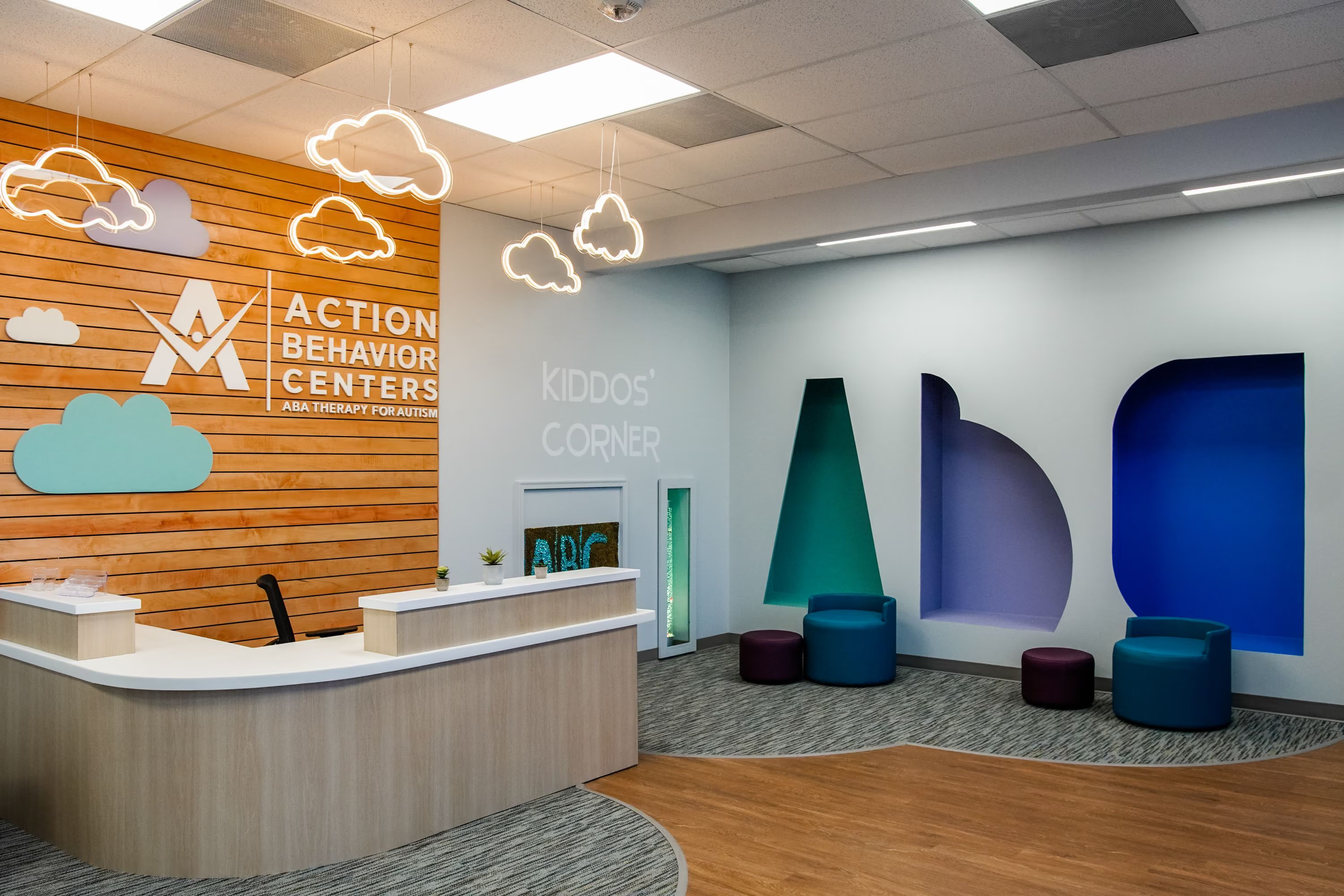
See our evidence-based ABA center design for yourself
At Action Behavior Centers, we’re always learning and improving. We listen to families, collaborate with clinicians, and review research regularly so we can continue providing high-quality ABA therapy that leads to meaningful outcomes.
Our center design reflects that commitment. For many families, the difference is noticeable the moment they walk through the door.
The best way to understand is to see it in person. We invite you to visit one of our centers and experience the space for yourself. Schedule a tour today and see how our ABA therapy centers designed for children diagnosed with autism can support your family.
At Action Behavior Centers (ABC), we help children diagnosed with autism spectrum disorder (ASD) reach milestone moments. Compassionate care is at the heart of everything we do, and our highly trained clinicians deliver evidence-based applied behavior analysis (ABA) therapy tailored to each child’s unique needs.
Our autism services include diagnostic support, 1:1 individualized care, parent training, school readiness programs, and Early Intensive Behavioral Intervention (EIBI) across hundreds of centers in Arizona, Colorado, Illinois, Minnesota, North Carolina, and Texas. Because no family should have to wait for help, ABC offers immediate access to care. Contact us today to get started.
.avif)
.avif)