Initial Diagnostic Evaluation: Autism Diagnostic Support
At Action Behavior Centers, we provide diagnostic support for families wondering if their child could have autism spectrum disorder (ASD). Our Initial Diagnostic Evaluations (IDEs) are designed for children ages 18 months through 6 years and are conducted by licensed psychologists in-center or via telehealth.

Families love working with Action Behavior Center

The ABA therapy provided here has been a game changer for my son, who in his own words said "I've learned how to make friends and finally enjoy school." The staff are delightful and knowledgeable, and patiently worked with us as we navigated our own journey through the world of ABA. The staff at ABC gave our family the tools we needed to improve our son's life and ours. It's definitely a team effort and parents need to be willing to put in the investment of learning too, but it's absolutely worth it. We even miss coming here as we had such positive interactions with the staff! Thank you, ABC!


The staff here is on point! I would highly recommend registering in this ABA program. Our son is 4 years old and has shown major improvement since he’s been enrolled (1.5 months). Never have had a bad experience, all of the therapists here are very good with all children from what I’ve witnessed. The director always greets us at the door at drop off and pick up with a very positive attitude. We have really enjoyed the warmth from this center! Our child has progressed very well in the little time that he has attended. Would rate 10 stars if possible! If you’re looking for a kind and compassionate environment for your children, would definitely consider ABC.
What is an Initial Diagnostic Evaluation (IDE)?
There is no single test that can diagnose autism spectrum disorder. Instead, licensed psychologists use a variety of methods to determine whether a child meets the criteria for ASD as outlined in the Diagnostic and Statistical Manual of Mental Disorders, Fifth Edition (DSM-5). An IDE at ABC is focused specifically on autism and does not assess for all possible childhood diagnoses.
Here's what to expect during the process:
- Parent interview: Caregivers share information about their child's medical history, developmental milestones, and daily behaviors.
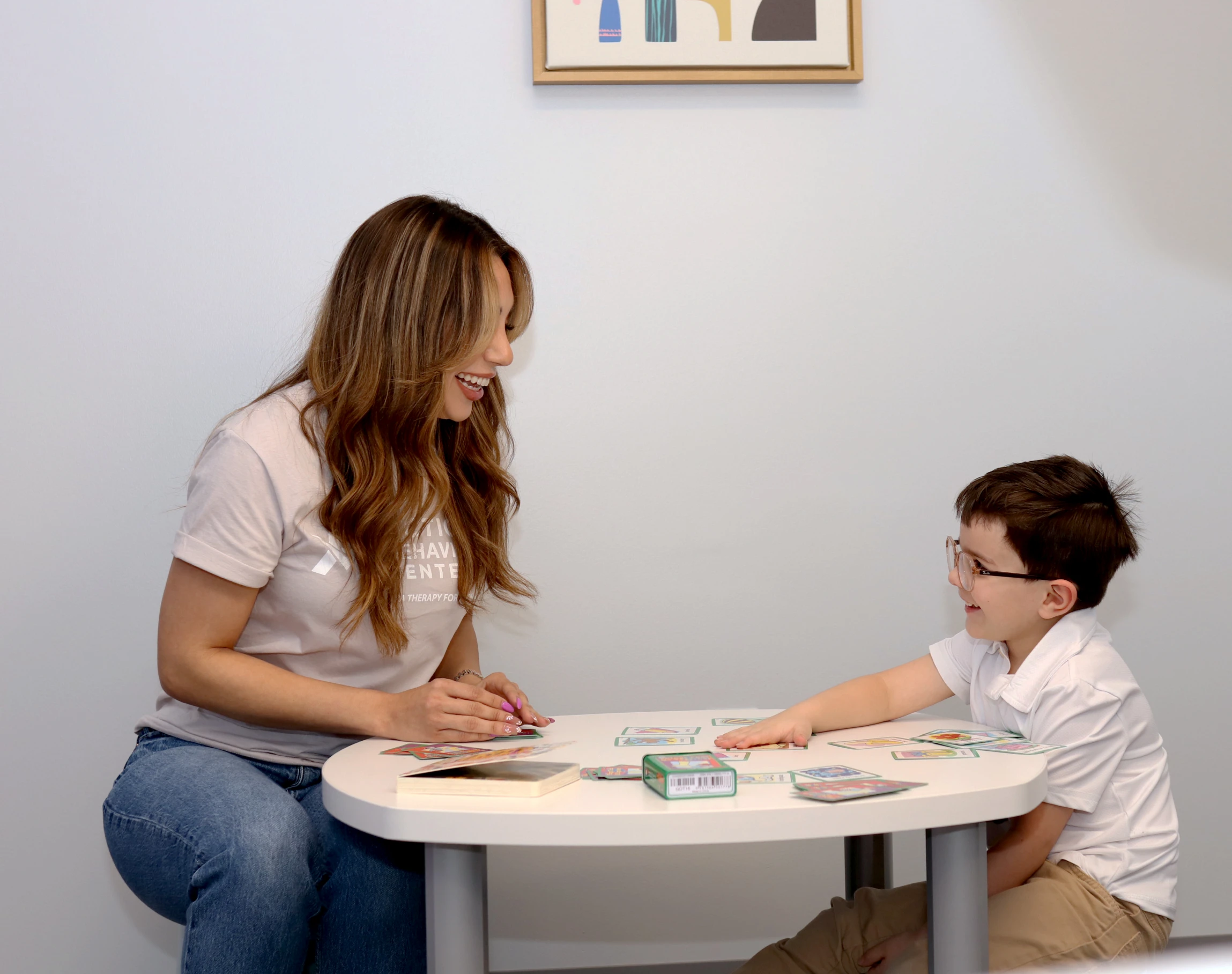
- Direct observation: The psychologist engages the child in interactive activities to observe how they communicate, play, and respond.
- Autism-specific tools: Additional tools are used to gather information about behaviors associated with autism.
- Results review session: The psychologist explains the findings, discusses whether the child meets criteria for an autism diagnosis, and provides individualized recommendations for next steps. Families also receive a written diagnostic report to share with their pediatrician, teachers, or other providers.

Who can complete an IDE?
Children are often referred for an IDE after completing an autism screener like the M-CHAT-R or CAST, or if concerns come up at a pediatrician visit.
For children with multiple or complex developmental conditions, a more extensive evaluation may be recommended. If that's the case, we can connect your family with providers who offer comprehensive assessments.
What does an IDE measure?
An Initial Diagnostic Evaluation examines the key areas of development that are closely related to autism, including:

1. Social communication
Our psychologist observes how your child uses eye contact, gestures, and facial expressions, and whether they share enjoyment or interest with others during interactions.

2. Play & imagination
The evaluation looks at how your child engages with toys, participates in pretend play, and builds simple stories or scenarios.
_2.webp)
3. Language & communication
Our psychologist assesses both expressive skills, such as talking, asking questions, and responding to others, and receptive skills, like understanding and following directions.

4. Restricted or repetitive behaviors
Our psychologist notes any repeated movements, intense interests, or sensitivities to changes in routines or environments.

5. Emotional responses
Our psychologist observes how your child manages transitions, handles frustration, and reacts to unexpected changes or new experiences.

What tools are used during an IDE?
Not every child will need every tool. Our psychologists choose the ones that best fit your child's age, history, and needs. These tools help support the diagnostic process and guide individualized recommendations.
Tools may include directly administered assessments such as the Autism Diagnostic Interview-Revised, Autism Diagnostic Observation Schedule, Childhood Autism Rating Scale, and the Tele-ASD-Peds, as well as parent questionnaires.
Where are IDEs performed?
IDEs are offered in select cities via telehealth and in-center. No matter the setting, our evaluations follow best practices and include a developmental interview with the caregiver, direct assessment of your child, and other sources of information such as questionnaires or related records.
How it works
Families can choose to complete the IDE virtually, allowing your child to be observed in a familiar, comfortable environment. The psychologist coaches the caregiver through simple activities while observing key behaviors and interactions.
For families who prefer an in-person evaluation, the psychologist guides activities while observing your child's responses directly. Parents are encouraged to take part in portions of the assessment and complete parent-report measures.
Contact us to learn more about what autism assessment services are offered in your area!
Does insurance cover an IDE?
We bill insurance for IDEs and check insurance coverage prior to scheduling. Parents can check if we provide IDEs for their specific insurance plan by calling one of our ABA centers.
What happens after an IDE?
After the evaluation, families meet with the clinician for a feedback session. During this meeting, you will receive:
- A detailed diagnostic report with test results and clinical observations
- Diagnostic insights explaining whether your child shows characteristics of autism
- Individualized recommendations for next steps, which may include applied behavior analysis (ABA) therapy, speech therapy, occupational therapy, or other interventions, depending on the diagnosis made.
At your request, Action Behavior Centers can share this report with your child’s pediatrician or other providers to support referrals, school planning, and ongoing care.
When is the right time for an IDE?


Does an IDE diagnose autism?
The IDE helps evaluate whether autism is present or not. If a child meets full diagnostic criteria, a diagnosis of autism is provided. If the child does not meet the criteria for an autism diagnosis, alternative diagnoses might be provided along with tailored recommendations.

Why is early autism diagnosis important?
Early diagnosis opens the door to early intervention, which has been shown to improve long-term outcomes. Many therapies, including applied behavior analysis therapy, require a formal diagnosis for insurance coverage.

What can we expect during an IDE?
The process is designed to be as comfortable as possible for your child. It typically includes:
- Parent interview – You’ll share details about your child’s development, daily life, and any concerns you’ve observed.
- Parent questionnaires – Families may complete standardized tools such as the Autism Diagnostic Interview–Revised (ADI-R), Behavior Assessment System for Children (BASC-3), or Autism Spectrum Rating Scales (ASRS).
- Child observation and testing – The psychologist will observe your child’s play, communication, and social interactions using specialized tools such as the Childhood Autism Rating Scale (CARS-2), ADOS-2, or Tele-ASD-PEDS.

What’s the difference between an IDE and the ADOS-2?
At Action Behavior Centers, we offer two types of autism assessments to help families take the next step toward answers and support.
An IDE is completed by a licensed psychologist and includes developmental history, behavioral observations, and standardized assessments to determine whether a child meets criteria for autism spectrum disorder. IDEs include diagnostic results and individualized recommendations for next steps. These evaluations are offered in select ABC cities and are billed to insurance plans accepted by ABC.
ABC also offers ADOS-2 assessments conducted by trained teammates. The assessment is completed at one of our centers, and results are sent to the child's pediatrician or specialist for review. The ADOS-2 provides useful information that the child's doctor can incorporate into their evaluation for autism. This service is offered at no cost as a community benefit to help pediatricians identify autism earlier and connect families with support faster, especially in areas where formal evaluations may have long waitlists.
Because ABC services vary by state, we encourage families to contact us to learn which assessments are available in their area.
Ready to get started?
Action Behavior Centers is here to help guide you through the diagnostic process so your child can access the care they need. Complete our brief online interest form, and a teammate will contact you to discuss your child’s needs at no cost.
FAQs about Initial Diagnostic Evaluations
What happens after the IDE?
The psychologist who completes the IDE will schedule a feedback appointment to go over results and recommendations. A written report will also be provided. At your request, we can send the report to other providers to support planning and next steps.
Do you offer virtual autism evaluations?
Yes. We offer flexible evaluation settings to meet each family’s needs:
- At-home via telehealth – Virtual evaluations allow your child to be observed in their familiar home environment, where natural behaviors are often easiest to see.
- In-center – Some families prefer an in-person evaluation at an Action Behavior Center, where the psychologist can guide activities in a structured setting. These are offered in select states.
Our psychologists are trained to adapt if challenges arise during the process. If your child has difficulty participating or if disruptions occur, the psychologist can reschedule, complete follow-up observations, or use additional measures to ensure accurate results.
Why is it important to get an autism diagnosis?
A formal diagnosis is often required for children to access therapies such as ABA, speech, or occupational therapy. It may also be necessary for school services and insurance coverage. Early diagnosis opens the door to early intervention, which has been shown to improve long-term outcomes.