Why Do Some Autistic Children Avoid Eye Contact?

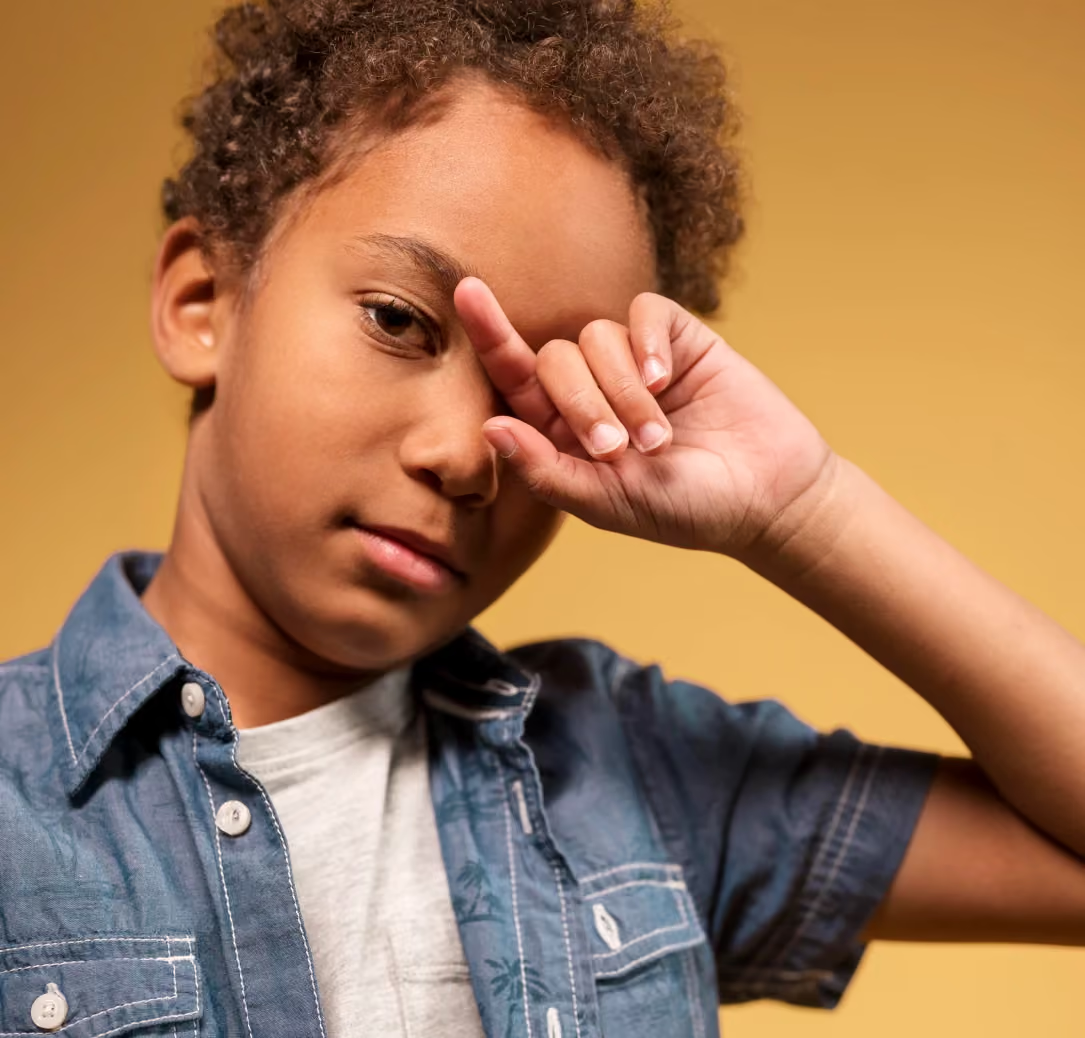
Have you ever noticed your child looking away during a conversation or rarely making eye contact? Eye contact is one of the ways children connect and communicate, but it does not come naturally to every child. For some autistic children, making eye contact can feel uncomfortable, distracting, or overwhelming.
Limited eye contact is one of the most common things parents notice and ask about, both before and after an autism spectrum disorder (ASD) diagnosis. It can be one possible sign of autism, but it is only one piece of a much bigger picture. Understanding what eye contact differences may mean can help you feel more confident in supporting your child and knowing when to reach out for help.
Autism and eye contact: why it can feel overwhelming
For some autistic children, looking at someone's face involves a lot happening at once. They are listening to words, trying to read expressions, managing what they are taking in through their senses, and figuring out how to respond. That is a lot to handle at the same time.
This is one reason autism social avoidance and limited eye contact often go hand in hand. It is not that your child does not want to connect. In many cases, looking away is how they are able to connect more comfortably. It is also important to know that a child can still be listening and engaged even when they are not making eye contact. Limited eye contact is not the same as disinterest.
Is avoiding eye contact a sign of autism?
Limited eye contact is one possible sign of autism, but it is not enough on its own to say whether a child is autistic. Some children naturally make less eye contact for many different reasons.
What matters more is the full picture. Parents often notice a combination of autism symptoms and developmental differences together. Some common signs of autism to watch for, alongside limited eye contact, include:
- Not responding consistently to their name
- Using fewer gestures, like pointing or waving
- Delayed speech or other communication differences
- Repetitive movements or routines
- Difficulty with unexpected changes and transitions
If you are noticing limited eye contact along with other signs of autism, it may be helpful to talk with your child's pediatrician or complete an autism screener. Early support can help families better understand their child's needs and figure out the right next steps.
No-cost webinar: Getting an Autism Diagnosis: Steps & Support for Families
Autism nonverbal cues: There is more than one way to connect
Eye contact is just one of many autistic nonverbal cues that parents and caregivers may notice. Autistic children may communicate and connect in ways that look a little different, but that does not make those connections any less real.
Your child might show you they are engaged by turning toward your voice, handing you a toy, repeating a phrase, or moving closer to you. These are all meaningful ways of connecting. When families learn to recognize and respond to their child's unique communication style, it builds trust and makes interactions feel easier for everyone.
Should you try to get your child to make more eye contact?
Eye contact should never be forced. For many autistic children, being pushed to make direct eye contact can actually make it harder for them to listen or focus.
Rather than focusing on eye contact itself, it is more helpful to pay attention to how your child is connecting overall. Are they responding to your voice? Are they showing interest in what you are doing? Those moments of connection matter, even if they do not look the way you might expect.
The goal is to support communication and connection in ways that feel comfortable and meaningful for each child. When families meet children where they are, it creates more positive interactions and reduces unnecessary stress.
How ABA therapy supports communication in autistic children
Applied behavior analysis (ABA) therapy is an evidence-based approach that uses the science of learning to help autistic children build functional skills for everyday life. At Action Behavior Centers, Board Certified Behavior Analysts® (BCBAs®) start by getting to know each child and family. That means asking parents about the goals that matter most to them, whether that is helping their child communicate wants and needs more easily, feel more comfortable in social situations, or connect with the people they love.
From there, BCBAs build individualized goals around communication, social connection, and independence. Registered Behavior Technicians® (RBTs®) work directly with children to implement those goals using positive reinforcement and learning strategies tailored to each child. RBTs track progress through data at every session, so families and BCBAs always have a clear picture of how a child is growing.
For some children, eye contact may be one individualized goal within a larger plan. But it will never be forced. ABA therapy is not about demanding compliance or changing who a child is. It is about teaching skills that help children communicate, advocate for themselves, and participate in daily life in ways that feel meaningful to them. That includes learning to ask for help, request a break, make choices, and say no.
Families often find that as their child builds confidence in communication, connection comes more naturally too, on their child's terms and at their own pace.
When to talk to someone about your child's development
You do not need to have all the answers before you reach out for help. Asking questions early gives your family more clarity and helps your child access support sooner if it is needed. At ABC, we make it easy to take that next step. You can start with a no-cost online screener to get a better sense of what you are seeing.
If you are ready to see what ABC looks like for your family, contact us to schedule a tour of your nearest center. You can also verify your insurance coverage online to understand your benefits before you get started.
At Action Behavior Centers (ABC), we help children diagnosed with autism spectrum disorder (ASD) reach milestone moments. Compassionate care is at the heart of everything we do, and our highly trained clinicians deliver evidence-based applied behavior analysis (ABA) therapy tailored to each child’s unique needs.
Our autism services include diagnostic support, 1:1 individualized care, parent training, school readiness programs, and Early Intensive Behavioral Intervention (EIBI) across hundreds of centers in Arizona, Colorado, Illinois, Minnesota, North Carolina, and Texas. Because no family should have to wait for help, ABC offers immediate access to care. Contact us today to get started.