Swimming Safety & Drowning Prevention Tips (+ Water Watcher Tag Download)

.avif)
Drowning is the leading cause of death for children ages 1 to 4 in the United States and a leading cause of accidental death for children diagnosed with autism spectrum disorder (ASD).1 Research shows that autistic children are at a significantly higher risk, with some studies estimating the risk to be up to 160 times greater than their peers.2
Unlike what we often see in movies, drowning is usually silent and can happen in as little as 30 seconds. Drownings often happen during everyday moments rather than planned swim time. A quick task at home, a change in routine, or an unfamiliar environment can create an opportunity for a child to access water.
The good news is that with the right tools, awareness, and support, families can take meaningful steps to prevent tragedy and help their child stay safe around water.

Key autism and drowning statistics parents should know
Understanding the data can help highlight why water safety is so important:
- About 1 in 31 children in the United States is diagnosed with autism 3
- Autism can be reliably diagnosed as early as age 2, but the average age of diagnosis is 4.9 years 4 5
- 91% of wandering-related deaths among children diagnosed with ASD are due to drowning, with an average of seven autistic children dying each month, primarily due to drowning 6
- Nearly 74% of fatal drowning incidents involving children diagnosed with ASD are preceded by wandering 7
Many of these situations are preventable when both parents and children are skilled and confident around the water.
Why autistic children are drawn to the water
Many children diagnosed with autism are naturally drawn to water, and understanding why can help families better protect them.8
- Water can provide strong sensory input. The feeling on the body, the freedom to move, and the way sound is reduced underwater can feel calming, similar to the comfort of a tight hug.
- For some children, water becomes a place that helps them regulate during moments of stress or overstimulation. They may leave an overwhelming environment to seek out something that feels familiar and soothing. And water, whether it’s a pool, pond, or even a bathtub, can become a natural destination.
When children wander toward the water, they’re often seeking comfort in the same way they might go to a favorite toy or quiet space. Understanding this connection helps explain how quickly a situation can change and why many incidents happen outside of planned swim time.

When and how drownings can happen
Many drownings happen during everyday moments, like at home, in a neighbor’s backyard, while traveling, or during a quick break in routine. A child may slip outside, wander toward a nearby pool or pond, or move toward water in an unfamiliar environment like a hotel or beach.
- Gaps in safety measures: Drowning situations are not usually the result of a lack of attention. Something as simple as an unlocked door, a missing fence, or a moment without a barrier in place can create an opportunity for a child to reach water.
- Changes in routine: Travel, new environments, and unfamiliar settings can be overwhelming for some children. In these moments, a child may seek comfort and leave a safe space, often without the same protections that exist at home.
- Limited awareness of danger: Some children may not yet have the ability to pause and recognize whether a situation is safe. Skills like stopping, waiting, and assessing risk often need to be explicitly taught and practiced over time.
- Limited access to high-quality swim instruction: Swim lessons may be difficult to find or afford, and not all programs are equipped to support children with different learning needs. However, some swim instruction is better than none.
Skill the parent, skill the child
Two actions can make a life-saving difference in water safety: helping your child build essential skills and making sure caregivers are prepared to respond in an emergency.
What it means to skill the child
Skilling a child doesn’t mean they need to learn advanced swim strokes. The goal is much simpler and more important: helping them stay safe if they reach water unexpectedly.
Skills may include:
- Staying calm in the water
- Rolling onto their back to float
- Breathing and keeping their airway above water
- Moving toward the edge or safety if they are able
These are foundational swimming safety skills that many autistic children can learn over time. Some children may need extra support to get comfortable in the water, and that’s okay. A Board Certified Behavior Analyst® (BCBA®) can help break skills into smaller steps and use strategies that support your child's unique leaning style.
What it means to skill the parent
Caregiver preparation is just as important. Many children who wander are found quickly and often close to home. In those moments, knowing what to do can save a life. Starting CPR right away can significantly increase the chance of survival if a child has been submerged and is unresponsive. Waiting for emergency services can take valuable time.
Learning CPR and emergency response skills is one of the most important steps a caregiver can take. Organizations like the American Red Cross offer training designed to help individuals feel prepared and confident in critical moments.
Building these skills together creates a stronger layer of protection. The next step is making sure your child has access to the right swim instruction and support.

Tips for navigating swim lessons
Choosing the right swim program can make a meaningful difference in helping your child build water safety skills. Not all swim lessons are the same, and for many families, finding the right fit takes a little extra intention.
What to look for in a swim program
A strong swim program should focus on safety first. Look for instruction that teaches foundational skills like rolling onto the back, floating, and breathing. These skills support safety in unexpected situations, where a child’s first response matters most.
It’s also important to find a program that offers:
- Individualized instruction based on your child’s needs
- Sensory accommodations, like quieter times or flexible scheduling
- Trial lessons to see if the program is a good fit
- Clear progress tracking so you can follow your child’s growth
Preparing your child for swim lessons
Preparation can help reduce stress and build confidence before swim lessons begin. Many families use strategies from applied behavior analysis (ABA) therapy to make new experiences feel more predictable and manageable.
Strategies may include:
- Visual schedules that show each step of the lesson in order. For example: arrive at the pool → sit on the edge → wait for the instructor → get in the water → practice skills → dry off → go home.
- Social stories that introduce the environment ahead of time, which may include pictures of the actual pool, the instructor, or the locker room, along with simple language like, “I will go to the pool. My teacher will help me. I will practice being safe in the water.”
- Visual supports and simple cues, such as a stop sign to signal “wait,” or a hand tap to indicate it’s time to enter the water.
- Familiar routines or reinforcement, like using a timer (“we’ll practice for two minutes, then take a break”) or offering a preferred item after the lesson to build motivation.
- Gradual exposure, starting small and building over time, like visiting the pool without getting in, sitting near the water, or practicing getting comfortable with water on the hands or face before moving to full participation.
Practical water safety tips
When it comes to water safety, small, proactive steps can make a big difference. The goal is to create multiple layers of protection that help keep your child safe at home, on vacation, and anywhere near water.
1. Add layers of protection
Safety works best when there are multiple barriers in place. Each layer adds time and increases your ability to respond quickly:
- Use tracking devices that can be placed in a shoe, belt loop, or bag
- Use visual cues, like stop signs on doors, to signal boundaries
- Add pool fencing with climb-resistant materials and secure gates
2. Teach “Wait for permission”
Consistent routines and expectations can help your child build safety awareness:
- Practice waiting for permission before entering the water
- Teach your child to pause and look for an adult before getting in
- Use visual supports like a stop sign or gestures like a hand tap
3. Choose the right safety gear
Not all flotation devices are safe.
- Use a Coast Guard-approved life vest that fits your child’s weight, not their height
- Make sure gear is properly fitted and worn as directed
- Avoid non-secure flotation devices that can shift or come off

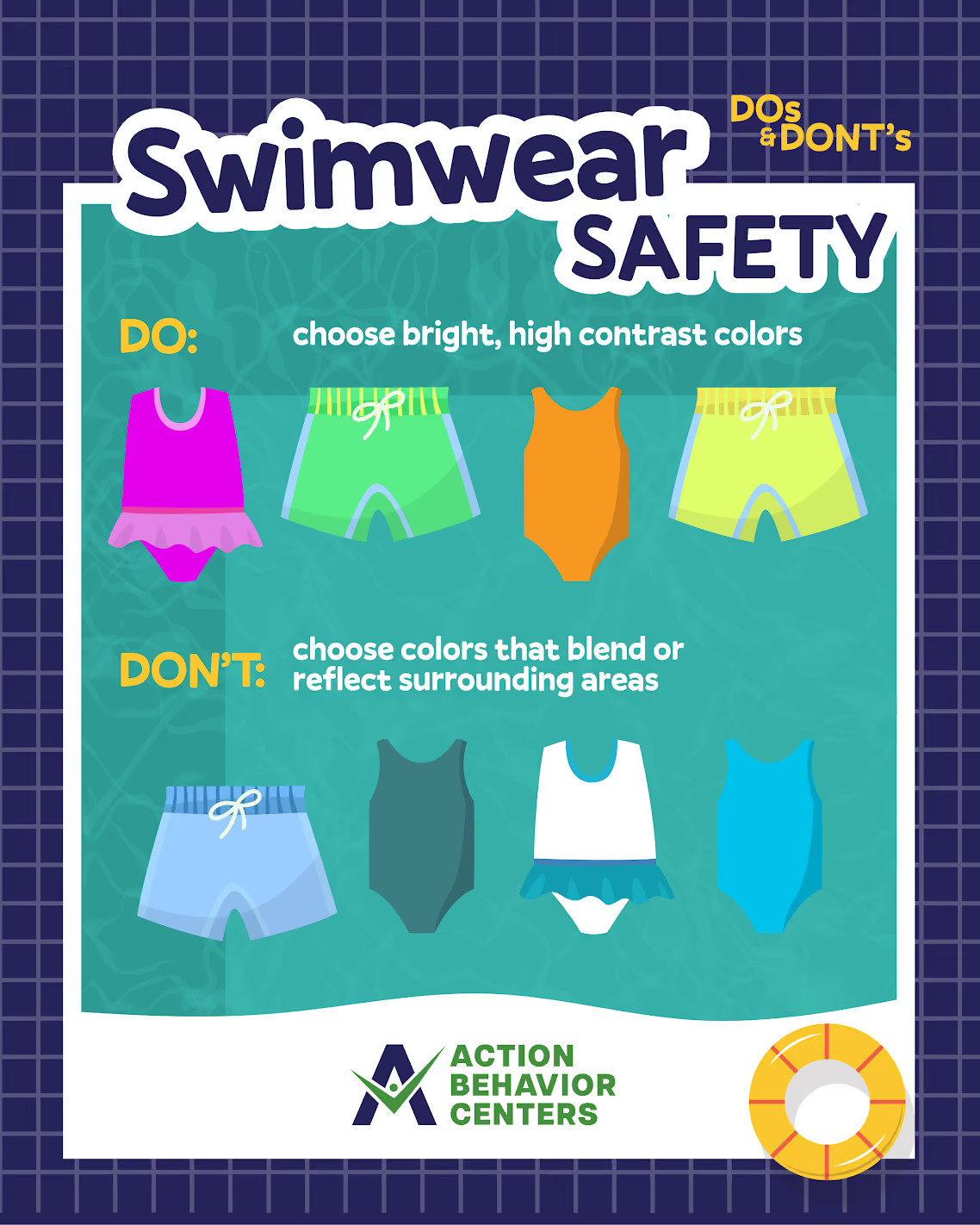
4. Choose high-visibility swimwear
Swimsuit color can impact how easily you can spot your child in the water:
- Bright, neon colors like yellow, orange, pink, or green are easiest to see
- Patterns and bold colors can help improve visibility
- Avoid blues, whites, and dark colors that blend into the water
5. Make supervision intentional
In group settings, it’s easy to assume someone is watching. Clear roles help prevent gaps:
- Use “water watcher” tags to assign one adult to watch the water actively
- Rotate supervision in short shifts to reduce distraction and fatigue
- Keep eyes on the water at all times, since drowning is often silent
Water Watcher Tag
Download Water Watcher Tag PDF
How ABA therapy and BCBAs can support water safety
ABA therapy and quality swim instruction can work together to help children diagnosed with autism build water safety skills. ABA therapy uses play and individualized teaching strategies to help children reach meaningful outcomes. These same principles can support learning in and around water:
- Modeling: showing what safe behavior looks like, such as entering the pool from the side or getting comfortable with water on the face
- Positive reinforcement: encouraging progress with meaningful rewards, like earning a preferred item or activity after spending time in the water
- Skill generalization: helping skills carry over from therapy into real-life settings like pools, vacations, and community environments
During Family Guidance, BCBAs work with families to align on what skills are being built, what strategies are working, and how to support the child across settings. Over time, these strategies become part of a broader toolkit that supports multiple areas of a child’s life.
Take the next step
You don’t have to figure this out on your own. With the right support, your child can build water safety confidence. Action Behavior Centers offers evidence-based ABA therapy for children diagnosed with autism, with a focus on helping them build practical skills for everyday life.
You can connect with an ABA center near you to ask questions, learn more about our autism services, or schedule a tour. If you’re ready to get started, we’re ready to help you take the next step.
At Action Behavior Centers (ABC), we help children diagnosed with autism spectrum disorder (ASD) reach milestone moments. Compassionate care is at the heart of everything we do, and our highly trained clinicians deliver evidence-based applied behavior analysis (ABA) therapy tailored to each child’s unique needs.
Our autism services include diagnostic support, 1:1 individualized care, parent training, school readiness programs, and Early Intensive Behavioral Intervention (EIBI) across hundreds of centers in Arizona, Colorado, Illinois, Minnesota, North Carolina, and Texas. Because no family should have to wait for help, ABC offers immediate access to care. Contact us today to get started.