The Role of Positive Reinforcement in ABA Therapy for Autism

Positive reinforcement is one of the most important applied behavior analysis (ABA) therapy strategies used to help children diagnosed with autism spectrum disorder (ASD) build functional skills for everyday life. When reinforcement is thoughtful, individualized, and connected to what a child actually finds meaningful, real skills begin to stick!
What is the definition of positive reinforcement in ABA therapy?
When a child uses a new skill in ABA therapy, they receive something meaningful to them immediately after. That "something" is positive reinforcement, and might be enthusiastic praise, a moment with a favorite toy, access to a preferred activity, or another response the child genuinely enjoys.
Here's an example: if a child asks for help using words or gestures and gets that help right away, they learn that communication works. That experience encourages them to try it again. The same principle applies across many skills, from following a routine to trying a new social interaction to completing part of a daily task.
Reinforcement isn't one-size-fits-all. At Action Behavior Centers, positive reinforcement for autism is always individualized. What motivates one child may not motivate another, which is why your child's Board Certified Behavior Analyst® (BCBA®) looks closely at their interests, strengths, and your family’s goals when building their treatment plan. Over time, this approach supports growth in communication, daily routines, social interaction, and independence.
Common types of positive reinforcement in ABA therapy
Positive reinforcement can take many forms depending on the child. In ABA therapy, BCBAs carefully choose reinforcement to ensure it's individualized, motivating, and connected to real learning goals.
Some common ABA therapy techniques for positive reinforcement include:
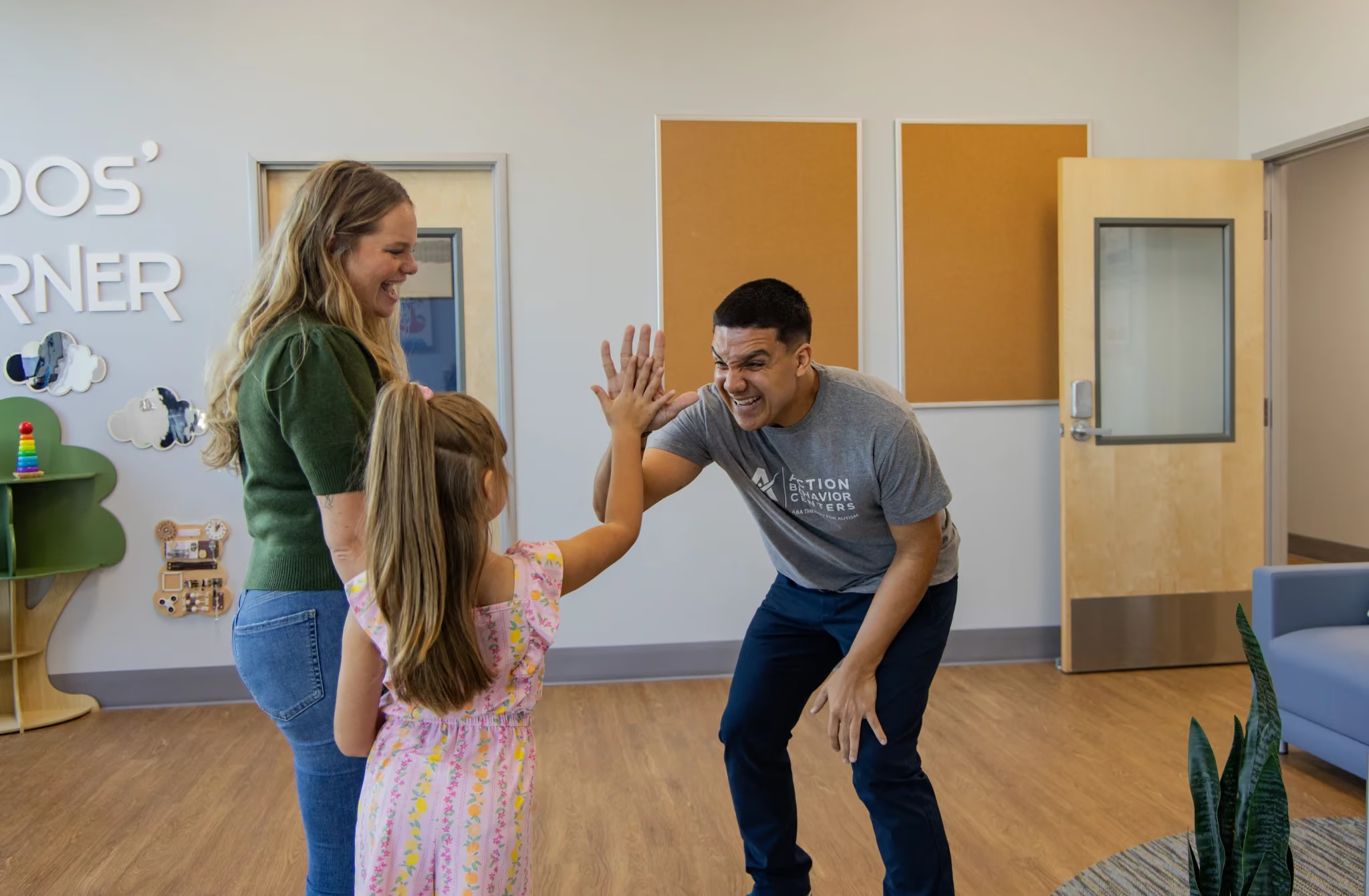
- Social positive reinforcement, such as praise, smiles, high-fives, or shared excitement from a trusted adult or peer
- Access to preferred activities, like extra time with a favorite toy, game, or play routine
- Tangible reinforcement, such as a preferred item used in a thoughtful, planned way
- Activity-based reinforcement, where a child earns time doing something they enjoy after practicing a skill
- Natural reinforcement, where the positive outcome is directly connected to the skill itself, such as getting help after asking for it
For many children, a warm, enthusiastic response from someone they trust can be just as motivating as any object or activity. What works best varies from child to child. Some children do well with social reinforcement alone. For others, BCBAs and Registered Behavior Technicians® (RBTs®) may start with more concrete reinforcement and adjust over time as skills become stronger and more consistent.
Why positive reinforcement matters in ABA therapy
Rather than only addressing what a child should stop doing, reinforcement-based ABA strategies help teach what to do instead. A child might be reinforced for asking for help, staying with an activity a little longer, using a new word, or following a routine more independently.
It's also worth understanding the difference between reinforcement and punishment. Positive reinforcement helps an autistic child learn and repeat a helpful skill by connecting it to a meaningful outcome. Punishment is meant to reduce a behavior. In ABA therapy at Action Behavior Centers, our clinicians use positive reinforcement because it focuses on building skills, not just stopping behaviors.
Reinforcement is also different from bribery. In ABA therapy, it's planned ahead of time and connected to a specific skill the child is working on. Bribery tends to be reactive, offered in the moment to stop a behavior or avoid a difficult situation. The goal of reinforcement isn't to pressure a child. It's to make learning clearer, more motivating, and more successful over time.
Learn more: Understanding ABA Therapy: What It Is, How It Helps, and What Parents Should Know
Does ABA therapy force children to comply?
No. ABA therapy is not about forcing compliance or making children behave in ways that ignore their autonomy. Instead, it focuses on teaching cooperation, communication, and self-advocacy skills so children can make their needs known and participate meaningfully in daily life.
BCBAs collaborate with families to set individualized goals for therapy that emphasize communication, choice-making, independence, and social engagement. Children are taught how to say no, ask for help, request breaks, and advocate for themselves in appropriate ways. The goal of ABA is to teach skills that increase independence and participation, not to demand obedience or change who a child is.
Does ABA therapy ignore emotional or social needs?
Not at all. Differences in social communication and interaction are part of the diagnostic criteria for autism spectrum disorder, which makes social skill development not only important but medically necessary. ABA therapy helps children build meaningful social skills such as engaging with others, responding to social cues, taking turns, initiating interactions, and communicating needs effectively. These skills are taught intentionally and practiced across daily routines so children can participate more fully at home, in school, and in their communities.
How ABC uses positive reinforcement in a child-centered way
At Action Behavior Centers, positive reinforcement is built into how our teammates teach autistic children meaningful skills every day. Our ABA therapy strategies are individualized by a BCBA and carried out in each session by RBTs who know and genuinely care about your child.
ABC also uses evidence-based ABA therapy approaches like Discrete Trial Teaching (DTT) and Natural Environment Teaching (NET). DTT breaks skills into small, achievable steps and uses positive reinforcement as children practice and build on what they've learned. NET takes that same reinforcement-based approach into more natural, play-based moments throughout the day, so learning happens in contexts that feel real and familiar.
Families are part of this process, too. ABC includes Family Guidance in every child's individualized plan. Caregivers meet with their child's BCBA twice a month to talk through their child’s progress and learn how to use ABA therapy strategies at home, including during everyday moments like meals, playtime, and morning routines.
Learn more: Family Impact Stories: Autism Acceptance in Action
Positive reinforcement helps turn small steps into milestone moments
At Action Behavior Centers, positive reinforcement is part of a child-centered approach to teaching functional skills that matter at home, at school, and in the community. To learn more about our ABA therapy services, contact us or find an ABA center near you. You can also check your insurance coverage online before you call.
At Action Behavior Centers (ABC), we help children diagnosed with autism spectrum disorder (ASD) reach milestone moments. Compassionate care is at the heart of everything we do, and our highly trained clinicians deliver evidence-based applied behavior analysis (ABA) therapy tailored to each child’s unique needs.
Our autism services include diagnostic support, 1:1 individualized care, parent training, school readiness programs, and Early Intensive Behavioral Intervention (EIBI) across hundreds of centers in Arizona, Colorado, Illinois, Minnesota, North Carolina, and Texas. Because no family should have to wait for help, ABC offers immediate access to care. Contact us today to get started.
.avif)
.avif)