U.S. Senators in North Carolina Tour ABC's Clayton Center to See ABA Therapy in Action

.avif)
Action Behavior Centers, a leading provider of evidence-based applied behavior analysis (ABA) therapy for children diagnosed with autism spectrum disorder (ASD), is taking an active role in state and federal advocacy efforts to protect and expand access to autism services nationwide.
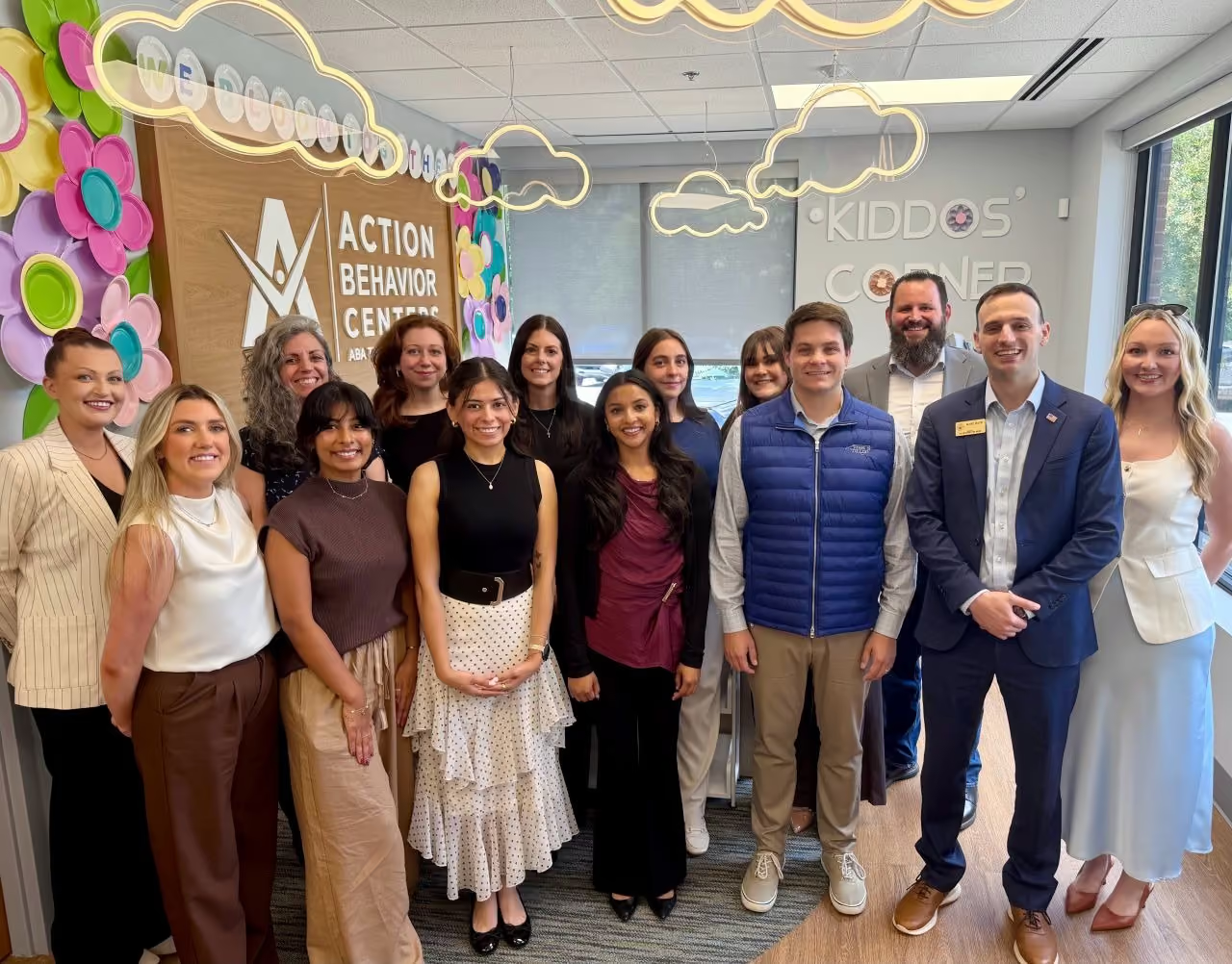
In August, ABC’s Family Advocacy team welcomed legislative staff to its center in Clayton, North Carolina, working alongside policymakers to support equitable funding and keep ABA therapy available without disruption.
Legislative Staff Visit ABC’s ABA Therapy Center in Clayton, North Carolina
ABC welcomed legislative staff to its Clayton Barber Mill Rd. ABA center, one of 35+ ABA therapy centers across the Raleigh-Durham and Charlotte regions. Trey Lewis, MPA, Northeast Regional Representative for the office of U.S. Senator Thom Tillis, and Blake Belch, Southeastern Regional Director for the office of U.S. Senator Ted Budd, toured the center and met with ABC's regional leadership team. The visit included a look at how early, individualized ABA therapy helps autistic children reach goals in social interaction, communication, and independence, along with a discussion of the policy factors shaping access to autism services in North Carolina.
“Conversations like these help strengthen partnerships and raise awareness of the growing need for accessible, compassionate autism services,” said Michael Liby, M.A., BCBA, who helped lead the tour and discussion. “We appreciated the chance to show Trey and Blake the impact this work has on the families we serve.”
In North Carolina, Action Behavior Centers stands alongside families, autism advocates, and fellow ABA providers as the state implements a 10% reduction in Medicaid reimbursement rates for ABA services. This builds on ABC’s ongoing advocacy in the state, including its participation in the North Carolina Medicaid Day of Action at the State Legislature last October.
Treatment intensity is a key part of that conversation. ABA should always be individualized, and no single number of hours is right for every child, but a substantial body of research shows that higher-intensity ABA, delivered at approximately 30 to 40 hours per week over an extended period, is associated with greater gains in intellectual, communication, and adaptive skills than lower-intensity treatment.1 ABC continues to advocate for funding and guidance that preserve individualized clinical judgment, so families can receive the level of care their child's team recommends.
A Commitment to Families and The Future of Autism Care
Through coordinated advocacy efforts, Action Behavior Centers’ Family Advocacy team continues to champion policies that help protect children’s access to autism therapy, support families who depend on Medicaid, and strengthen the ABA provider network.
“Our mission has always extended beyond the walls of our centers,” said Bryan Davey, Ph.D., BCBA-D, Vice President of Public Policy & Advocacy at Action Behavior Centers. “The ABC Family Advocacy team is here to make sure that every child, regardless of their ZIP code or insurance type, can access the life-changing care they deserve.”
At Action Behavior Centers (ABC), we help children diagnosed with autism spectrum disorder (ASD) reach milestone moments. Compassionate care is at the heart of everything we do, and our highly trained clinicians deliver evidence-based applied behavior analysis (ABA) therapy tailored to each child’s unique needs.
Our autism services include diagnostic support, 1:1 individualized care, parent training, school readiness programs, and Early Intensive Behavioral Intervention (EIBI) across hundreds of centers in Arizona, Colorado, Illinois, Minnesota, North Carolina, and Texas. Because no family should have to wait for help, ABC offers immediate access to care. Contact us today to get started.
.avif)
-1200x900-ac4a44d.avif)