ABC Celebrates 2026 Graduates, Sharing Family Stories and Research on School Transition Outcomes

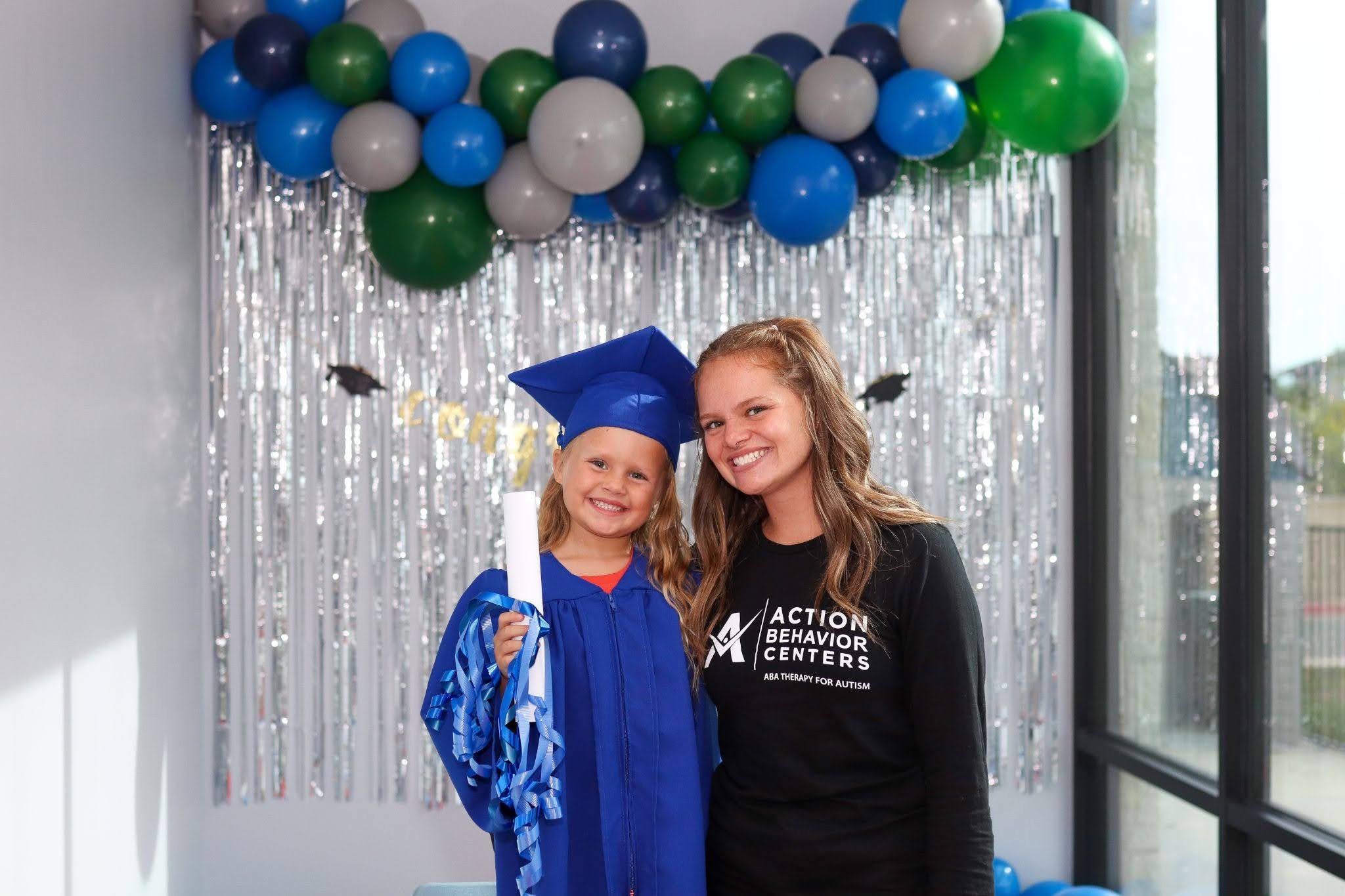
Action Behavior Centers is celebrating the autistic children who graduated from applied behavior analysis (ABA) therapy in 2026. For many families, graduation marks the end of early intervention as their child transitions into the classroom.
How ABA therapy supports school readiness and placement outcomes
2025 research from the Action Institute for Outcomes Research (AIoR), ABC's research arm led by Executive Director Dr. Linda LeBlanc, shows why the classroom transition matters. AIoR evaluates ABA treatment outcomes and shares results with families, clinicians, and the scientific community, feeding findings into continuous quality improvement across ABC's 450+ ABA therapy centers.
At Action Behavior Centers, our goal is to help children build the skills they need to thrive in school and beyond. To understand how our graduates adjust after therapy, we follow up with families about seven months after their child transitions out of care to learn more about their school experiences.
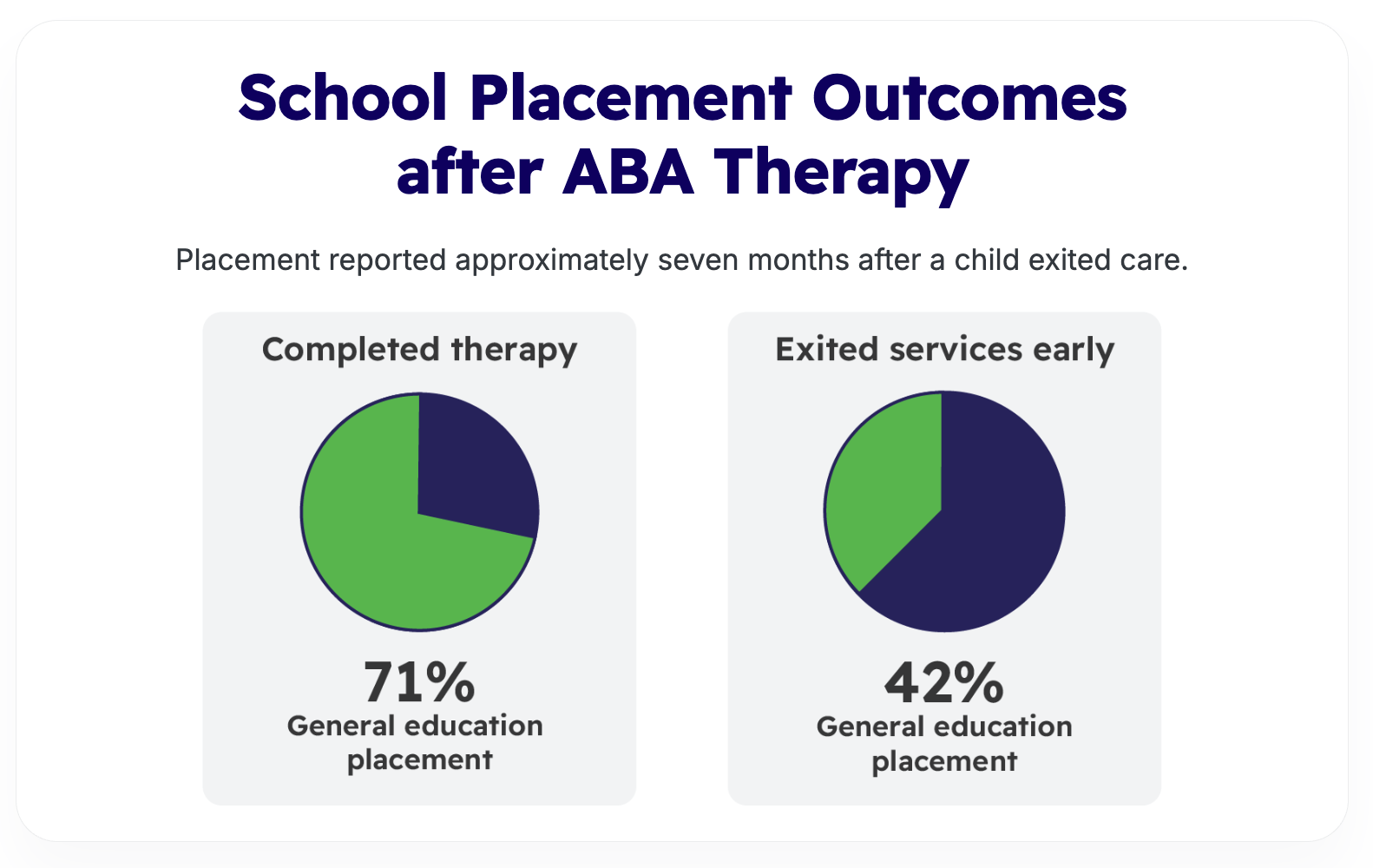
In a study of 193 families, we found clear differences in school placement between children who completed therapy and those who exited early:1
- Greater inclusion after graduation: 71% of children who completed therapy spent most or all of their time in general education settings.
- More challenges for those who left early: 58% of children who exited services prematurely spent most or all of their time in special education or alternative placements.
- Completion matters: Staying in ABA treatment until your child’s clinical team recommends graduation can improve readiness for school.
- Early intervention builds lifelong skills: Communication, social, and independence skills developed through ABA therapy help children succeed in classrooms and community settings
Reaching that milestone starts well before a child's last day at ABC. Board Certified Behavior Analysts® (BCBAs®) begin talking with families about school readiness at intake, and the conversation becomes more intentional as a child nears school age. BCBAs look for the following skills, all in service of helping children advocate for themselves with teachers, peers, and family:
- Communicating independently
- Following routines
- Joining classroom-like activities
- Participating in social interaction
Family impact stories
Three families shared what the school readiness process looked like for them. All testimonials are from families who formerly received services at Action Behavior Centers and gave written permission for their stories to be shared.
Taryn from Texas said the skills and confidence her child gained continue to serve them in early elementary school. "My child was at ABC for three amazing years. They supported not just him, but our whole family, with monthly meetings and guidance every step of the way," Taryn said. "He began ABA treatment nonverbal and left with so many new skills. Now he's thriving in the 4th grade. We can't thank ABC enough!"
For Jessica in Arizona, graduation brought good news and a few nerves. "I was terrified," she said. "My child's clinical team had helped us through so much. What was I going to do without them and our biweekly check-ins?" Jessica's BCBA eased those worries by staying involved through the transition, including attending her daughter's Individualized Education Program (IEP) meeting virtually to make sure the school had what it needed to pick up where ABC left off.
A few weeks after graduation, Jessica's daughter started kindergarten. "At school, my child was given an amazing support team that understood her behaviors and needs," Jessica said. "They saw what she was capable of and pushed her to be in the general education classroom. She had a wonderful and successful first year."
Lora from Texas remembers how her child's BCBA brought the same care and attention to her child's goals as she would to her own family, even visiting their home to help prepare for the transition to kindergarten.
On graduation day, former Registered Behavior Technicians® (RBTs®) joined virtually to celebrate, and Lora and the team still exchange updates today. "That's the kind of dedication you show these children, the kind of care and commitment I could never find anywhere else," Lora said. "You see a future for them, even when we can't." Today, her child is excelling in kindergarten, making friends, learning multiplication, and recently earned a Hardworking Historian award.
What this means for your family
"Every graduation is the result of a BCBA and family working together toward the same goal," said Dr. Charna Mintz, Chief Clinical Officer at Action Behavior Centers. "Watching children carry those skills into the classroom with confidence is exactly what evidence-based ABA treatment is meant to do."
Every child's path to graduation looks different, and the goals along the way are set with your family from the start. Contact an Action Behavior Center near you to learn how our clinicians support children on their way to milestone moments like these.
At Action Behavior Centers (ABC), we help children diagnosed with autism spectrum disorder (ASD) reach milestone moments. Compassionate care is at the heart of everything we do, and our highly trained clinicians deliver evidence-based applied behavior analysis (ABA) therapy tailored to each child’s unique needs.
Our autism services include diagnostic support, 1:1 individualized care, parent training, school readiness programs, and Early Intensive Behavioral Intervention (EIBI) across hundreds of centers in Arizona, Colorado, Illinois, Minnesota, North Carolina, and Texas. Because no family should have to wait for help, ABC offers immediate access to care. Contact us today to get started.
.avif)
.avif)
-1200x900-ac4a44d.avif)