A Day in the Life of an RBT® ABA Therapist at Action Behavior Centers

Registered Behavior Technicians® (RBTs®) are at the heart of what happens at an applied behavior analysis (ABA) therapy center. They're the teammates who spend the most time with autistic children each day, forming connections and teaching functional skills for everyday life like communication and social interaction. Here's a look at what a day as an RBT at Action Behavior Centers involves, through the eyes of two teammates.
How to become an RBT with no ABA experience
Previous experience in ABA is helpful, but it's not required to join ABC as a Behavioral Therapist (BT) or RBT. ABC provides hands-on, in-person training that covers the foundations of ABA therapy, session structure, data collection, and skill practice before new teammates ever begin running individualized sessions with a child.
Now an Assistant Clinical Director in Texas, De'Aja Roberts joined ABC as an RBT in 2019 with no previous background in the field. She still remembers her first weeks of training: "The training academy definitely helped me. Although it was 40 hours of intense training modules, it definitely cleared up the questions that I did have and laid the foundation of what my RBT role would be like."
New teammates go through a two-week cohort covering ABC's core expectations and session techniques like Discrete Trial Teaching (DTT) and Naturalistic Environment Teaching (NET). They also get hands-on practice alongside practicum students, aspiring Board Certified Behavior Analysts® (BCBAs®), and master's-level students in ABC's Everest Program. Working alongside teammates on that path early on gives new RBTs a real look at where a career in behavior analysis can lead. That could mean staying close to direct care or working toward BCBA certification down the road.
Each BCBA at ABC is supported by a dedicated team of about nine RBTs, and every RBT works with a small caseload of children each week. Once training wraps up, new RBTs spend time pairing with each child on their caseload before starting sessions. Pairing means building trust first: sitting with a child, learning what they enjoy, and connecting with preferred toys, games, or activities so the child associates their RBT with something positive. It's an unhurried process, and it's the foundation everything else is built on.
A typical day for an RBT: morning arrivals and session prep
ABC centers operate Monday–Friday, 8:00 a.m.–5:00 p.m. RBTs typically work with three to five children per week, rotating between them roughly every two hours. Every session is individualized, with each child working toward their own goals alongside their assigned RBT.
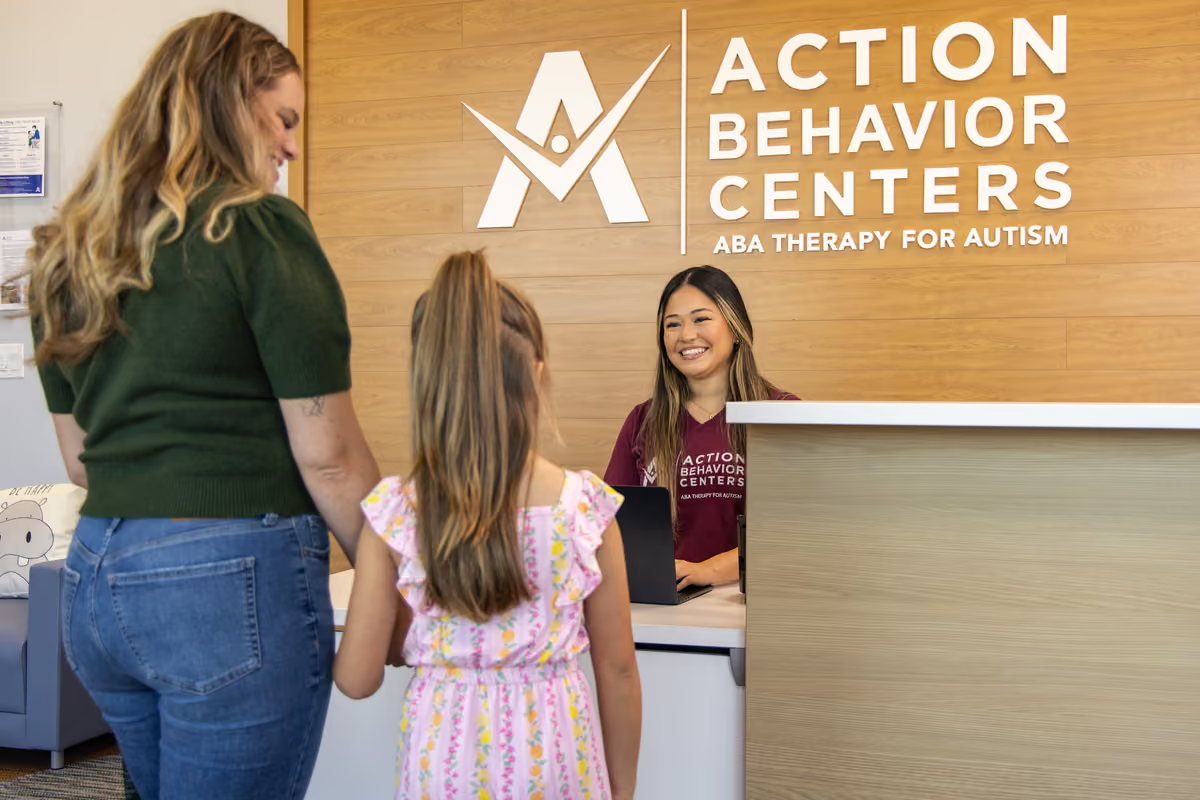
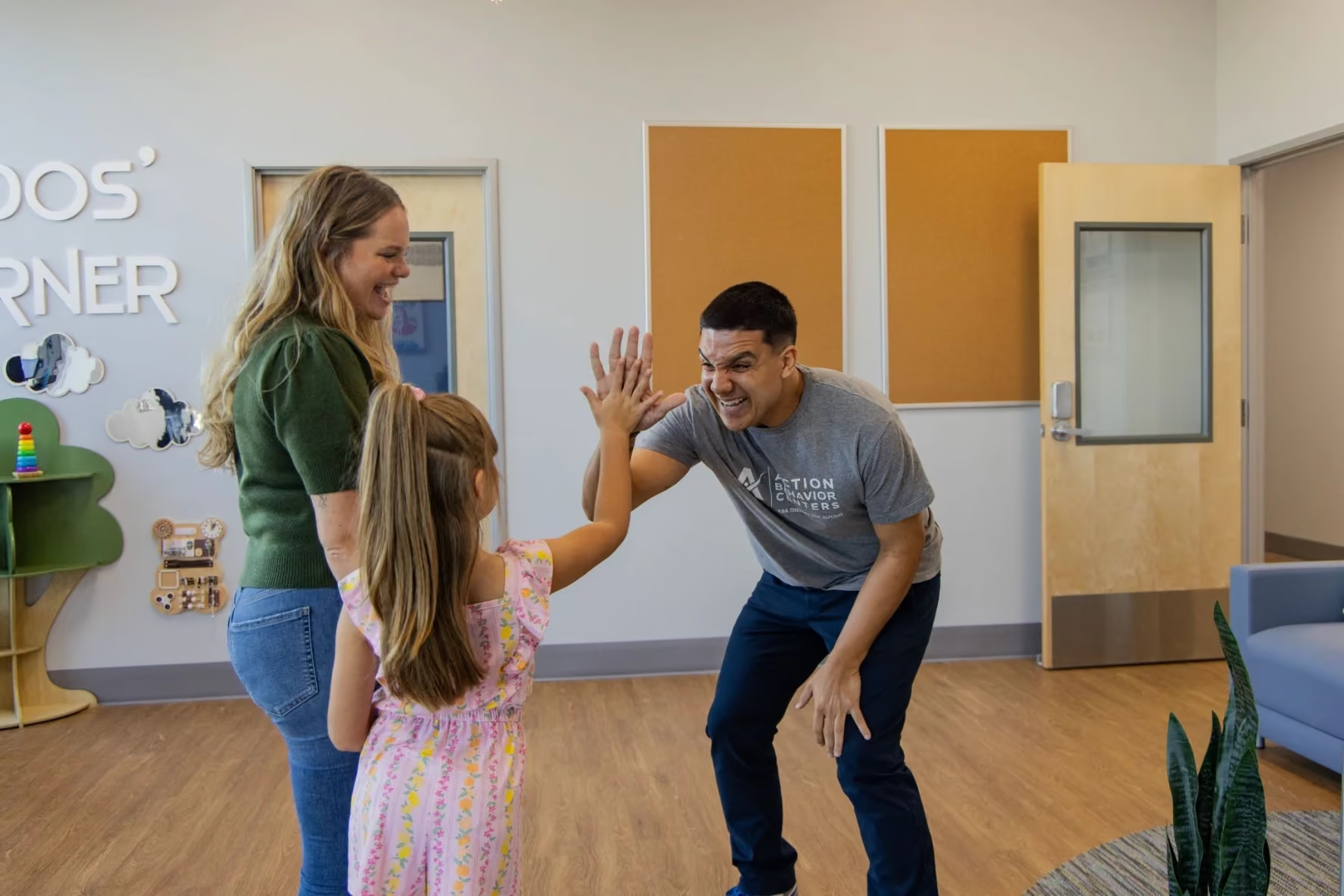
The day starts with greeting children and families at drop-off, reviewing each child's unique goals for the day, and setting up the space. DTT rooms at ABC are stocked with preferred reinforcers tailored to each child, kept organized, and filled with natural light.
Strong pairing at the start of each session sets the tone for everything that follows. RBTs are coached by their BCBA to watch for each child's cues, like body language, vocalizations, and engagement with materials, and to adjust their pace and approach in the moment based on what they see.
Inside an ABA therapy session: DTT, NET, and skill-building
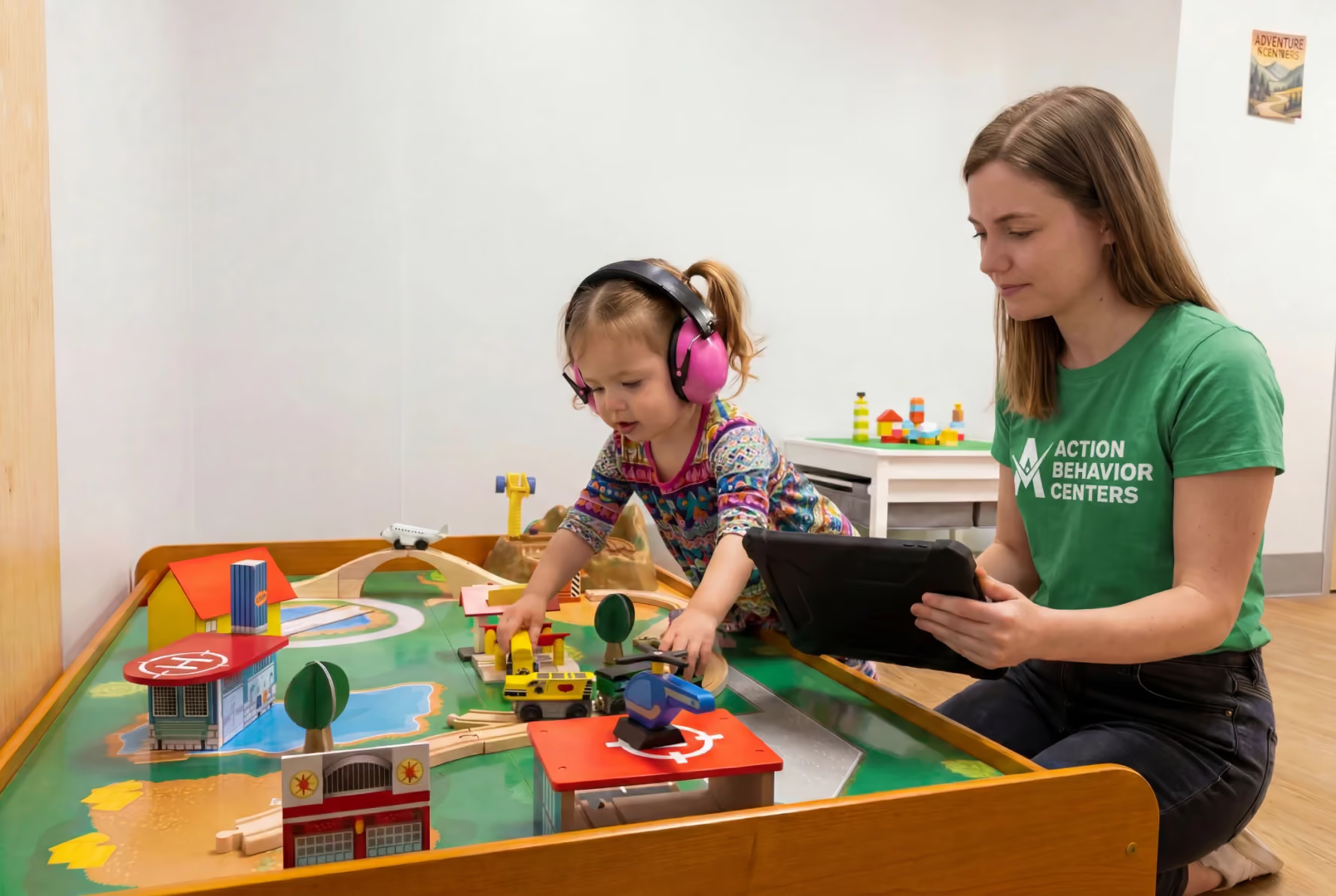
RBTs spend most of the day running ABA sessions. They move between DTT and NET settings, helping children build skills in communication, social interaction, daily living skills, and peer play. DTT breaks a skill into small, structured steps and teaches it in a focused setting. NET builds those same skills into everyday moments and play, so a child can use them in more than one place, not just in the center.
Raven LaPlant, an RBT at ABC's Naperville, Illinois, center, describes what it's like to work with children at different points in their development: "You're going to work with children that are super responsive, they're vocal, they talk a lot, or you're going to have a child that doesn't really talk to you and likes to have their space. You could work on ways for them to interact with you, and that carries over to where they'll show interest with peers."
RBTs collect data throughout every session using CentralReach. That data gives BCBAs the information they need to guide each child's goals, which are set in collaboration with families during Family Guidance. ABC's centers also include gym spaces and sensory rooms. Play and skill-building go hand in hand at ABC, and gym time is often built into a child's day alongside table-based work and Circle Time.
Grow into a BCBA with the Everest Program
That ongoing support doesn't stop once training ends. As Raven puts it: "ABC is a great company because they give you a lot of support while you're learning how to be an RBT and as you continue your growth and your learning."
For RBTs working toward BCBA certification, ABC's Everest Program offers a paid path forward, including unrestricted fieldwork hours, exam prep materials, and mentorship from clinical supervisors. Raven is currently a Rising Star+ in the Everest Program, working toward her BCBA exam.
De'Aja came up through the same pathway, moving from RBT to BCBA in 2023 before stepping into her current role as Assistant Clinical Director: "The Everest Program gave me a clear roadmap from RBT to BCBA, and my mentors pushed me to keep going the whole way. Even now, in a leadership role, I make it a priority to stay close to the clinical work and support my team the way I was supported."
Learn more about the Everest Program
What makes the RBT role rewarding
Raven describes the role as a privilege: "Being an ABA therapist is really special here. Being able to do things with these children that I know are going to really change the quality of their life and the quality of their families' lives is so rewarding. I’m so privileged to be able to do this kind of life-changing work for these families as an RBT."
That variety also keeps the work engaging. Days look different depending on the children on your caseload, the skills being targeted, and where each child is in reaching their individualized goals. It's part of why many RBTs choose to build a long-term career at ABC.
Why RBTs choose a long-term career at ABC
The milestone moments RBTs help children reach ripple far beyond the center. Families notice. Parents come back and share what they're seeing at home, and those moments are often what RBTs say they remember most.
Raven describes watching a child begin to connect with peers: "It's really cool to be able to see that they are starting to scan the area for peers, like, 'Hey, you're like me, let's play together.' And to be able to see parents say, 'Oh yeah, I noticed what you were talking about, and they started doing that at home now.'"
For De'Aja, one of her most meaningful memories came at drop-off: "His mom had shared a story about how the night before they were sitting at the dinner table and they were going around asking him who's in his family. He said Mom, Dad, listed his siblings, and then he said my name."
De'Aja has since supported two of those children all the way through graduation from ABA treatment. She describes watching them thrive at school, still carrying the skills they built together: "Knowing that I left an impact on their lives and they will probably be forever changed for the better means everything. They're still thriving, they're at school, all the skills that we've taught they've maintained, and they're continuing on. They’re doing what we always knew that they could do."
Ready to get started? How to apply for an RBT position at ABC
ABC is hiring RBTs across our network of 450+ centers in Arizona, Illinois, Pennsylvania, Texas, North Carolina, South Carolina, Minnesota, Colorado, and Indiana. No prior experience is required. We provide full in-person training, guaranteed hours, ongoing clinical supervision, and a clear path to grow, whether that's staying close to direct care or working toward BCBA certification through the Everest Program. Plus, best-in-class benefits.
Explore open RBT and BT positions at Action Behavior Centers today.
At Action Behavior Centers (ABC), we help children diagnosed with autism spectrum disorder (ASD) reach milestone moments. Compassionate care is at the heart of everything we do, and our highly trained clinicians deliver evidence-based applied behavior analysis (ABA) therapy tailored to each child’s unique needs.
Our autism services include diagnostic support, 1:1 individualized care, parent training, school readiness programs, and Early Intensive Behavioral Intervention (EIBI) across hundreds of centers in Arizona, Colorado, Illinois, Minnesota, North Carolina, and Texas. Because no family should have to wait for help, ABC offers immediate access to care. Contact us today to get started.
.jpg)