Is My Child at Risk for Autism? Early Signs & Risk Factors Explained

There’s a lot of information online (and unfortunately, a lot of misinformation) about what causes autism spectrum disorder (ASD). At Action Behavior Centers, we’re committed to being a trusted voice for families navigating those early questions. We help sort fact from fiction and offer guidance that’s rooted in science, not fear.
Scientists learn more about autism every day. If you feel overwhelmed by what you’ve read or heard, you’re not alone. Our clinical team stays up-to-date on the latest research so families can get the accurate information they deserve
What causes autism?
Autism doesn’t have one single cause. Studies show that autism develops from a mix of factors that affect how the brain develops. These are called risk factors. They don’t cause autism by themselves, but they can make it more likely for a child to receive a diagnosis.
Are children born with autism?
Autism spectrum disorder is a developmental condition. Children may not show obvious signs at birth, but early signs often appear in the first years of life as they grow and develop. Researchers believe autism is linked to brain development and genetics, not something that suddenly “happens” later in childhood.
Learn more: How Many Children Have Autism?
What are the early signs of autism?
Autism often becomes noticeable between 12 and 18 months, though some signs may appear earlier. Common early signs include:
- Limited interest in playing or interacting with others
- Reduced eye contact or facial expressions
- Delays in speech or language development
- Repetitive movements, such as hand-flapping or rocking
- Strong attachment to routines and difficulty with changes
- Sensitivity to sounds, textures, or other sensory input
If you notice any of these signs, talk with your child’s pediatrician. Autism screening and early intervention can make a meaningful difference in helping them learn and develop new skills.
Are you noticing signs? In our Autism 101 webinar, clinical experts from Action Behavior Centers explain what autism spectrum disorder is, how it can look different from child to child, and when autism signs may first appear.
Is autism genetic?
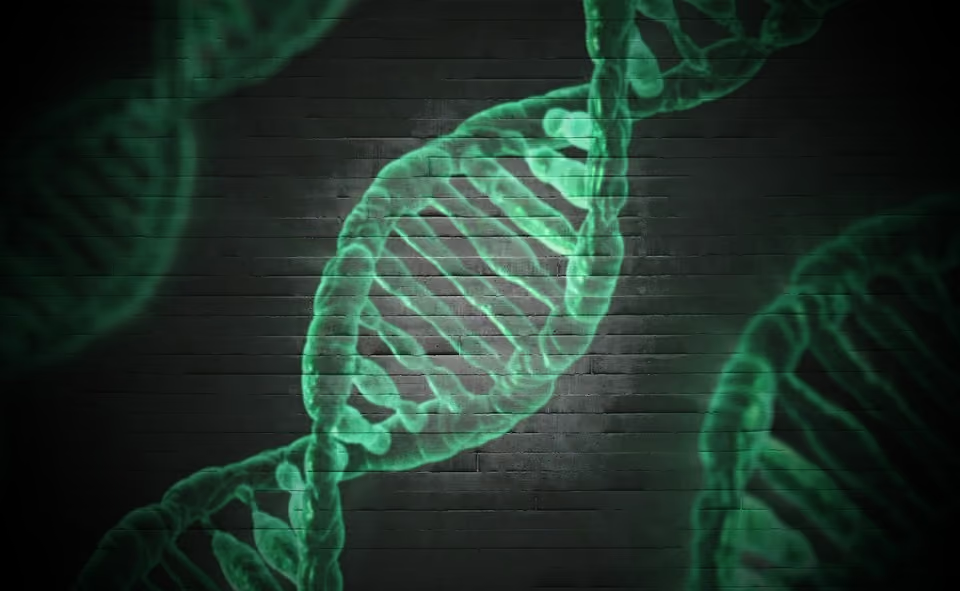
Yes, research shows that a combination of genetics and the environment plays a strong role in autism. Scientists have found hundreds of genes linked to autism, many of which affect how the brain develops and how brain cells communicate. Environmental factors may add to this risk, though researchers are still learning how genes and the environment interact.1
Autism often runs in families. If one child is diagnosed, siblings have a higher chance of receiving a diagnosis as well. About 20% of younger siblings of autistic children receive an ASD diagnosis, a rate seven times higher than that of the general population.2
Some chromosomal conditions are also associated with a higher likelihood of autism. According to the Centers for Disease Control and Prevention (CDC), children with fragile X syndrome receive ASD diagnoses more often.4 Knowing which genes and chromosomal changes are linked to autism helps researchers ask better questions and develop more accurate diagnostic tools.
Which parent carries the autism gene?
Autism spectrum disorder does not come from a single gene passed down by one parent. Instead, many genes and environmental factors interact in complex ways. Both parents contribute genetic variations that may increase the chance that a child develops autism, so no single parent “carries” an autism gene.1
Learn more: Q&A with a Psychologist: Common Autism Questions Answered
Environmental influences before & during pregnancy
Genes play a major role in autism, but certain environmental factors during pregnancy may also influence how autism develops. These factors don’t cause autism on their own. Instead, they may interact with genetic risk in ways that shape early brain development. This helps explain why autism can look different from child to child.
Studies have found associations between autism and:
- Advanced parental age
- Pregnancy complications
- Maternal infections with fever during pregnancy
- Prenatal exposures, including certain medications, toxins, or high air pollution levels
Researchers believe these factors may influence brain development through mechanisms such as immune system changes, inflammation, cell stress, or shifts in the maternal microbiome. While more studies are needed, continued research helps doctors and scientists look for ways to support healthier pregnancies and earlier autism identification.5
Want to learn more about what the research says? Explore our autism resources for parents for science-backed answers to the questions families ask most.
Birth complications & early brain injury
Some birth complications may raise autism risk, including:
- Premature birth (36 weeks or earlier)
- Breech presentation, induced or no labor, preeclampsia, and fetal distress
- Low birth weight
- Postpartum hemorrhage
- Presence of brain anomalies
Children who experience a serious brain injury early in life may also face a higher risk. In one study of over 500 children who experienced an acquired brain injury before age 2, about 2.7% later received an autism spectrum disorder diagnosis. On average, these children received their diagnosis nearly five years later than typical. Many also had other health challenges that may have masked early autism symptoms.7
It’s important to remember that risk factors do not guarantee an autism diagnosis. Many children with these risk factors never receive a diagnosis, while some children diagnosed with autism do not have any known risk factors.
Learn more: Autism Vs. ADHD: What Parents Should Know
How do clinicians diagnose autism?
Clinicians diagnose autism through screenings, evaluations, and standardized diagnostic tools. Developmental pediatricians, psychologists, and neurologists often lead this process.
The steps usually include:
1. Developmental screening
Pediatricians at well-child visits may use questionnaires to identify potential red flags for autism. Parents can also complete screeners like the M-CHAT-R and CAST at home.
2. Comprehensive autism evaluation
If screening suggests signs of autism, your child may receive a referral for a full diagnostic evaluation. This evaluation may include:
- Autism specific tests such as the ADOS-2 or IDE.
- Parent interviews and developmental history questionnaires
- Direct observation of communication, play, and social interaction
3. Multidisciplinary input (if needed)
In some cases, autism assessments may include input from speech-language pathologists, occupational therapists, or educators, especially if multiple areas of development appear impacted.
Did you know? We wrote a no-cost ebook to help families learn more about the autism diagnosis process. If you're unsure about the next steps, this is a great place to start! Download the guide here.
What happens after an autism diagnosis?
An autism diagnosis is the beginning, not the end. Applied behavior analysis (ABA) therapy is one of the most researched and widely recommended approaches for supporting autistic children. At ABC, our clinicians work alongside your family to help your child learn and develop functional skills for everyday life.
Learn more: Questions Parents Should Ask When Choosing an ABA Therapy Program
Ready to take the next step?
If something feels off with your child’s development, trust your gut. You don't need to have all the answers before reaching out. We’re here to help you understand your child’s needs and help you navigate your next steps. You can also check your autism insurance coverage online before you call. Action Behavior Centers offer immediate access to care, with no waitlists. Contact us today or find an ABA center near you to schedule a tour.
At Action Behavior Centers (ABC), we help children diagnosed with autism spectrum disorder (ASD) reach milestone moments. Compassionate care is at the heart of everything we do, and our highly trained clinicians deliver evidence-based applied behavior analysis (ABA) therapy tailored to each child’s unique needs.
Our autism services include diagnostic support, 1:1 individualized care, parent training, school readiness programs, and Early Intensive Behavioral Intervention (EIBI) across hundreds of centers in Arizona, Colorado, Illinois, Minnesota, North Carolina, and Texas. Because no family should have to wait for help, ABC offers immediate access to care. Contact us today to get started.