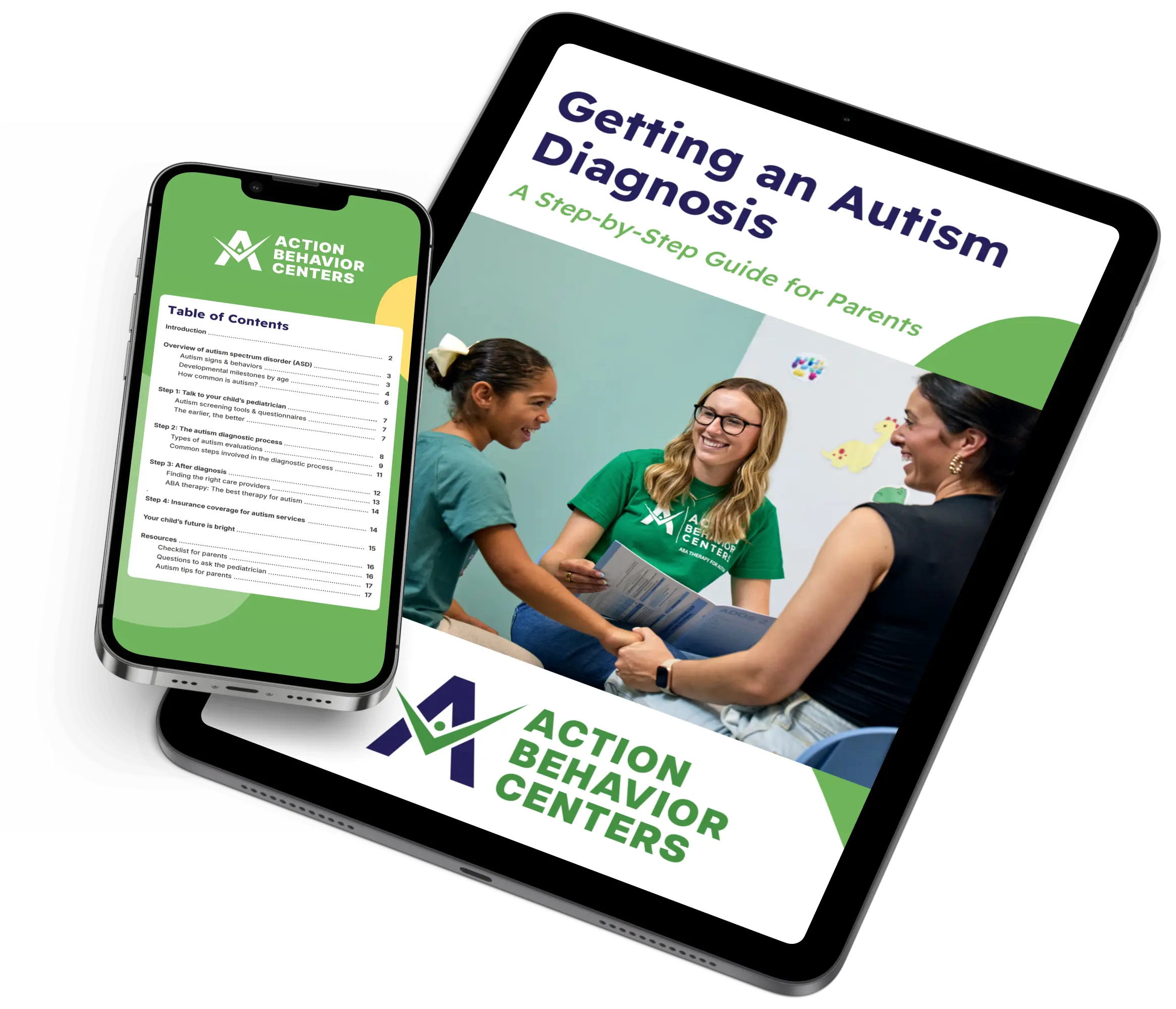
Autism screening & diagnostic support 

For many families, the period before receiving a diagnosis for autism spectrum disorder (ASD) can be filled with uncertainty. At Action Behavior Centers, we support families through every stage of the autism evaluation process.

Early autism diagnosis opens the door to early intervention services, like applied behavior analysis (ABA) therapy, which can help children reach milestone moments.

How to get screened for autism

Wondering how to test for autism or where to begin an early autism evaluation? At Action Behavior Centers, we are here to help you navigate the autism evaluation process so your child can access the care they need. 

The first step is completing a simple online autism screening tool for children of all ages. If screening results suggest your child may be at risk for autism, we offer in-person assessments like the ADOS-2 for children ages 18 months to 6 years old. Access to care is important to us, and our autism screenings and ADOS-2 assessments are completed at no cost. 

Why an autism diagnosis matters

A formal autism diagnosis is often necessary before a child can:

What happens during an autism assessment?

We make getting your child tested for autism simple and supportive. Here’s what to expect:

  1. Complete a no-cost, online screener: Tools like the M-CHAT-R (for toddlers) or CAST (for older children) can help identify your child’s autism risk and give insight into whether further evaluation is necessary.
  2. Schedule an in-person ASD evaluation: If screening results suggest a high autism risk, your child may benefit from a formal assessment using the ADOS-2, a research-backed diagnostic tool.
  3. Review results with your child’s provider: Our clinician compiles your child’s ADOS-2 results in a summary that is sent directly to your child’s pediatrician or a pediatric specialist. Based on the ADOS-2 results and additional developmental information, your doctor may provide a diagnosis of autism if the criteria are met. It’s important to note that the ADOS-2 results are not a diagnosis; they are one piece of the picture to help your doctor identify your child’s needs. 
  4. Next steps for support: If your child is diagnosed with autism, we’ll help guide you through available autism resources, including ABA therapy.
Top ABA Therapy near you available at Action Behavior Centers

M-CHAT-R screening tool for autism in toddlers

The Modified Checklist for Autism in Toddlers, Revised (M-CHAT-R) is a parent-report ASD screening tool designed to assess the risk in toddlers. This autism quiz consists of 20 questions for parents to answer about their child's social, communicative, and play behaviors. These questions are critical in identifying potential signs of ASD in children.

A high-risk score does not confirm an autism diagnosis. Our online autism tests are simply tools that help identify children who may benefit from early autism evaluation and intervention. If a child receives a high-risk score, they should receive further assessment by an autism specialist.

The CAST autism screening tool for older children

The Childhood Autism Spectrum Test (CAST) is a 39-item parent questionnaire developed by the Autism Research Centre (ARC) at the University of Cambridge.1 It can be used to screen for symptoms of autism and social communication difficulties in older children. A high score suggests that your child may benefit from further diagnostic testing for autism.

Top ABA Therapy near you available at Action Behavior Centers

The ADOS-2 assessment for autism

The Autism Diagnostic Observation Schedule, Second Edition (ADOS-2) is a leading autism assessment tool used by clinicians to identify autism symptoms in children. During this play-based assessment, our team engages face-to-face with your child to observe their communication, social skills, and behaviors.

Contact us today to learn more about scheduling a no-cost autism evaluation near you for your child.

What happens in an ADOS-2 assessment?

A gold standard

The ADOS-2 is considered a “gold standard” measure for helping evaluate a child for ASD. This tool is backed by research and helps clinicians reliably and accurately identify autism symptoms.

Play-based

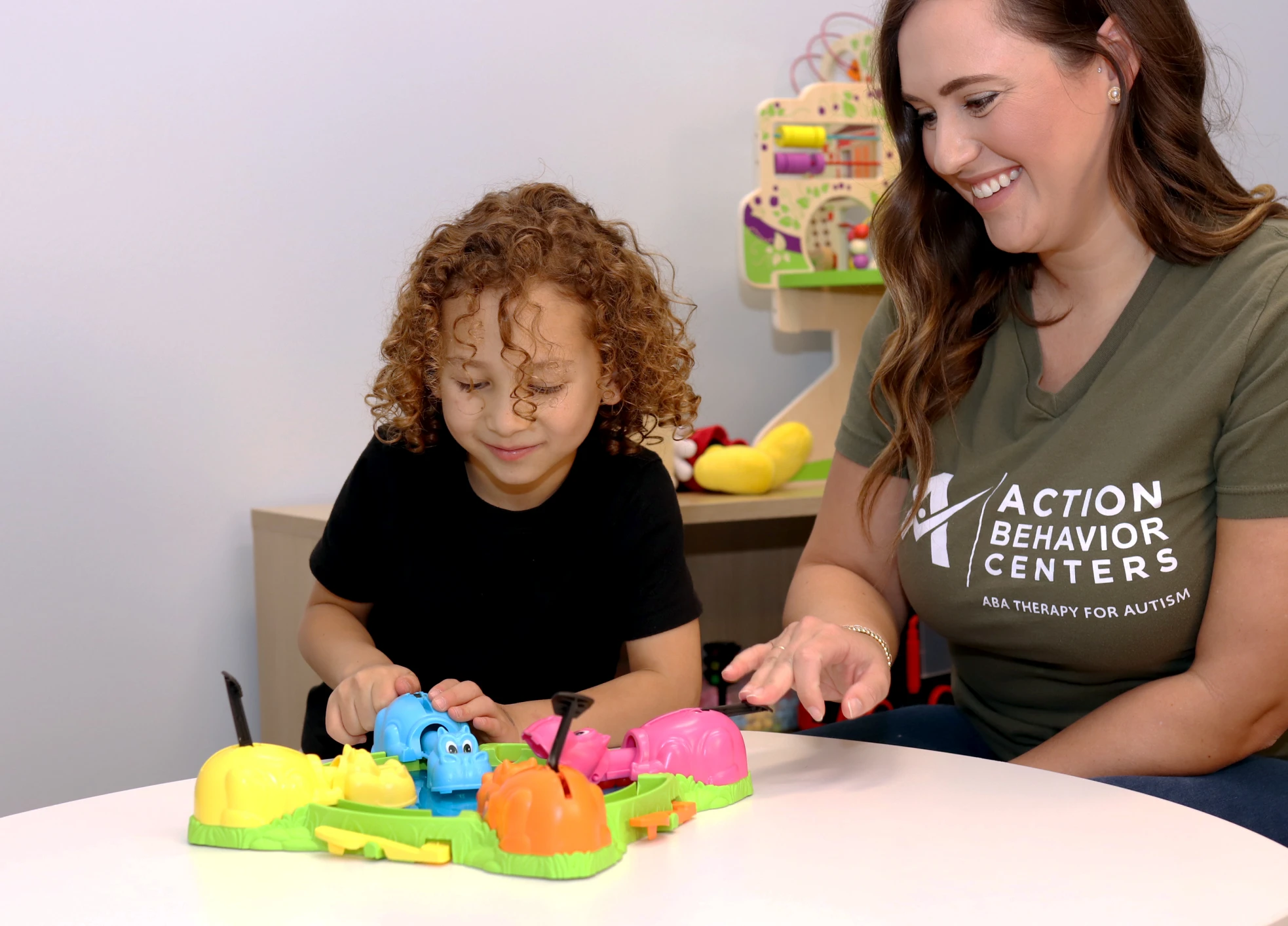
Children have fun participating in the ADOS-2. It’s not like going to the doctor! During the 40 to 60-minute assessment, our clinicians engage in play and activities tailored to the child’s age and developmental abilities.

Scoring

Following the assessment, scores are calculated that indicate how closely the child’s behaviors in fundamental areas match autism characteristics. A summary is sent to the child’s pediatrician or referring provider to include in their diagnostic process and recommendations.

Frequently asked questions about autism testing

View all FAQs

Who can diagnose autism?

In the U.S., autism is diagnosed by qualified medical and mental health professionals through a comprehensive evaluation. This process may include direct observation, developmental history, caregiver interviews, and standardized diagnostic tools to determine whether a child meets criteria for autism spectrum disorder (ASD). Many children can be evaluated as early as age 2.

Professionals who may diagnose autism include:

  • Developmental pediatricians
  • Child psychologists or neuropsychologists
  • Child psychiatrists
  • Pediatric neurologists

BCBAs may support the evaluation process, but a formal autism diagnosis is typically made by one of the specialists listed above.

Screening tools, such as the M-CHAT-R or CAST can help identify signs that a child may be at risk for autism. However, a full autism evaluation is required to make a formal diagnosis.

What is ABA therapy and how does it work?

Applied behavior analysis (ABA) therapy is a gold standard in care for children diagnosed with autism spectrum disorder (ASD). It helps children build practical skills and reduce behaviors that may make learning harder. Through ABA therapy, children can improve communication, develop self-care routines, and better manage emotions.

At Action Behavior Centers (ABC), our Board Certified Behavior Analysts® (BCBAs®) and Registered Behavior Technicians® (RBTs®) use positive reinforcement and individualized strategies to support growth. Families are active partners in therapy, working with our clinical team to set goals and track progress.

At what age should my child take the M-CHAT-R?

The M-CHAT-R is an autism screening designed for children between 16 and 30 months of age. The American Academy of Pediatrics recommends screening at 18- and 24-month well-child visits to check for early signs of autism spectrum disorder (ASD).

The M-CHAT-R does not diagnose autism, but it can help identify whether a child may need a more in-depth developmental evaluation. Results can guide next steps with your pediatrician or early intervention services.

How long does an ADOS-2 assessment take?

The ADOS-2 (Autism Diagnostic Observation Schedule, Second Edition) typically takes 40 to 60 minutes to complete.

It’s important to know that the ADOS-2 is just one part of a comprehensive autism evaluation. In addition to the ADOS-2 session, the full evaluation may include caregiver interviews, developmental history, questionnaires, and scoring time.

When did autism become a diagnosis in the United States?

Autism became a formal medical diagnosis in the U.S. in 1980, when the American Psychiatric Association recognized “Infantile Autism” in the Diagnostic and Statistical Manual of Mental Disorders (DSM-III). This marked an important shift by separating autism from childhood schizophrenia and creating consistent diagnostic criteria.

Over time, the understanding of autism expanded, leading to today’s diagnosis of autism spectrum disorder (ASD). Key milestones include:

  • 1943: Leo Kanner described early infantile autism
  • 1980 (DSM-III): Autism recognized as a formal diagnosis
  • 1987 (DSM-III-R): Criteria expanded, renamed Autistic Disorder
  • 1994 (DSM-IV): Autism-related conditions grouped under Pervasive Developmental Disorders (including Asperger’s syndrome), laying the groundwork for viewing autism as a "spectrum"
  • 2013 (DSM-5): All related diagnoses were unified under ASD, the standard used today