Autism screening & diagnostic support
Something feels different. Maybe your child isn't quite hitting the same milestones as other children their age, or their pediatrician suggested taking a closer look. An autism screener is a simple, no-cost first step that can help bring some of your questions into focus.
At Action Behavior Centers, we offer two screening tools, the M-CHAT-R and the CAST, that parents can complete at home to understand better their child's risk for autism spectrum disorder (ASD) and whether a full autism evaluation is the right next step.

What are the steps in the autism diagnostic process?
Not sure where to begin? Here's what the process looks like at ABC.

1. Complete a no-cost online screener
Start at home with a simple online autism screening tool. These questionnaires ask about your child's social, communicative, and play behaviors. They can help you understand whether your child may be at risk for autism and whether further evaluation is worth pursuing.
2. Schedule an autism evaluation
If your child receives a high-risk screener score or if you have ongoing concerns, the next step is an in-person or telehealth evaluation. Depending on your region and your child's age, this may be an ADOS-2 or an Initial Diagnostic Evaluation (IDE).
3. Review results with your child's provider
After the evaluation, results are shared with your child's pediatrician or specialist. If your child completed an ADOS-2, we compile the results into a summary sent directly to their doctor. If your child completed an IDE, a licensed psychologist will review findings with you directly.
4. Confirm diagnosis
Based on evaluation results, parent questionnaires, and your child's developmental history, your doctor or psychologist will determine whether your child meets the criteria for autism spectrum disorder. You'll receive guidance on what the diagnosis means and what comes next.
Why an autism diagnosis matters
Early diagnosis opens the door to early intervention, and early intervention has been shown to support better long-term outcomes for autistic children.1 Many families find that having a diagnosis brings clarity and opens doors to a support system they didn't have before.
A diagnosis is often required before a child can:
- Access evidence-based autism services like applied behavior analysis (ABA) therapy
- Receive insurance coverage for autism treatment
- Qualify for special education support and school accommodations

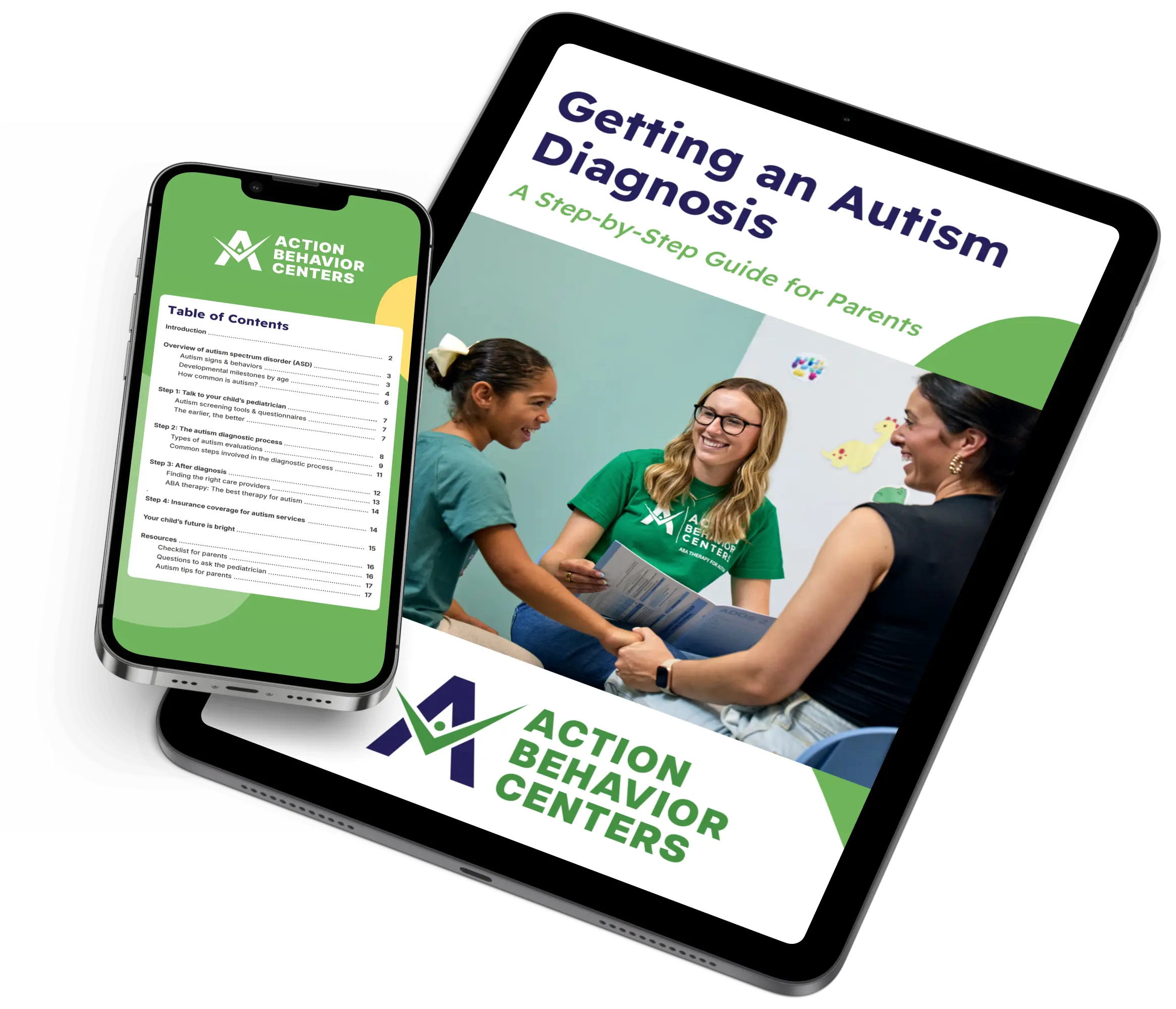
.webp)
M-CHAT-R screening tool for autism in toddlers
The Modified Checklist for Autism in Toddlers, Revised (M-CHAT-R) is a parent-report screening tool designed to assess autism risk in toddlers.
- Takes just a few minutes to complete at home
- A high-risk score does not confirm an autism diagnosis
- An autism specialist should further assess children who receive a high-risk score
The CAST autism screening tool for older children
The Childhood Autism Spectrum Test (CAST) is a parent questionnaire developed by the Autism Research Centre (ARC) at the University of Cambridge.¹
- Designed for school-age children
- A high score suggests your child may benefit from further evaluation
- A high score does not confirm an autism diagnosis

What’s the difference between the M-CHAT-R and the CAST?
Both screening tools are designed to help identify signs of autism early. Here's a simple breakdown to help you choose the right one for your child. Not sure which screener makes sense? Contact us and we can help!
M-CHAT-R
- For toddlers (16 months to 3 years old)
- 20 yes/no questions
- Screens for early autism risk in toddlers
CAST
- For school-age (4 to 11 years old)
- 39 yes/no questions
- Screens for autism symptoms and communication difficulties
Frequently asked questions about autism testing
View all FAQs
Does an autism screener tell me if my child has autism?

Who can diagnose autism?

What happens after my child is diagnosed with autism?